Advertiser & Editorial Disclosure: The Bulkhead Seat earns an affiliate commission for anyone approved through the links below. This compensation may impact how and where links appear on this site. We work to provide the best publicly available offers to our readers. We frequently update them, but this site does not include all available offers. Opinions, reviews, analyses & recommendations are the author’s alone, and have not been reviewed, endorsed, or approved by any of these entities.
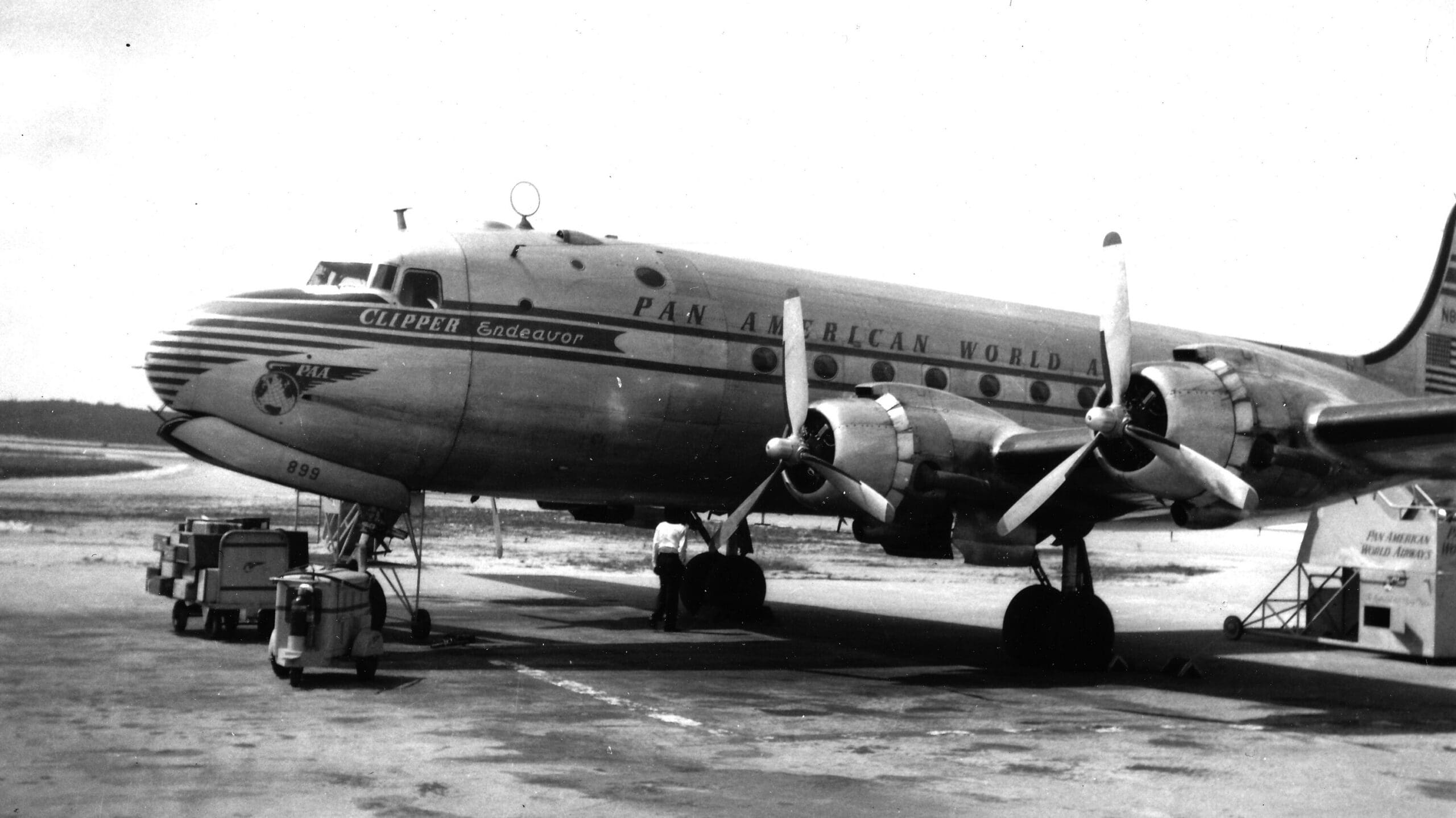
The wreckage of a Pan American World Airways (Pan Am) aircraft that crashed into the Atlantic Ocean more than seven decades ago has been located off the coast of Puerto Rico and brought long-awaited answers to one of aviation’s most significant accidents.
The Air/Sea Heritage Foundation, working with Deep Sea Vision and the team behind the Discovery Channel’s Expedition Unknown, identified the remains of the Douglas DC-4 “Clipper Endeavor” resting approximately 2,000 feet below the surface. The discovery was made on June 2nd using advanced sonar technology and later confirmed through underwater imagery.
The aircraft disappeared into the ocean on April 11, 1952, just minutes after departing Puerto Rico for New York. Investigators determined that both engines on the aircraft’s right wing failed shortly after takeoff, forcing the crew to attempt an emergency landing on the water.
While everyone on board initially survived the impact, the aircraft sank within minutes. Only 17 of the 69 people aboard (64 passengers and five crew members) were rescued. The remaining 52 occupants lost their lives.
The tragedy became a turning point for commercial aviation. Investigators concluded that many passengers were unfamiliar with the location of emergency equipment and evacuation procedures, contributing to the high death toll. The findings helped drive new regulations requiring airlines to provide passengers with preflight safety demonstrations covering life vests, emergency exits, and other critical safety information before flights over water.
The search team narrowed the aircraft’s likely location before deploying autonomous underwater technology to scan the seabed. A research vessel equipped with high-resolution sonar later assisted the effort, leading to the discovery of the aircraft in two large sections. Images captured during a follow-up survey revealed portions of the fuselage, including the distinctive Pan American logo, confirming the identity of the wreck.
Because the crash site serves as the final resting place for dozens of victims, there are no plans to recover the aircraft. Instead, the Air/Sea Heritage Foundation is working with Puerto Rican officials to pursue additional protections for the site and establish a memorial honoring those who perished. The discovery also brings closure to families who have waited generations to learn the aircraft’s final location, including the crash’s two known living survivors, who were informed after the wreck was positively identified.
Anthony’s Take: This is fascinating and I’m going to have to watch this episode. I guess it’s never to late for mysteries to be solved.
(Image Credits: Air/Sea Heritage Foundation.)
User Generated Content Disclosure: The Bulkhead Seat encourages constructive discussions, comments, and questions. Responses are not provided by or commissioned by any bank advertisers. These responses have not been reviewed, approved, or endorsed by the bank advertiser. It is not the responsibility of the bank advertiser to respond to comments.
Advertiser & Editorial Disclosure: The Bulkhead Seat earns an affiliate commission for anyone approved through the links above This compensation may impact how and where links appear on this site. We work to provide the best publicly available offers to our readers. We frequently update them, but this site does not include all available offers. Opinions, reviews, analyses & recommendations are the author’s alone, and have not been reviewed, endorsed, or approved by any of these entities.