
Advertiser & Editorial Disclosure: The Bulkhead Seat earns an affiliate commission for anyone approved through the links below. This compensation may impact how and where links appear on this site. We work to provide the best publicly available offers to our readers. We frequently update them, but this site does not include all available offers. Opinions, reviews, analyses & recommendations are the author’s alone, and have not been reviewed, endorsed, or approved by any of these entities.
United Airlines Chief Executive Officer Scott Kirby delivered a scathing public criticism of Rolls-Royce during the International Air Transport Association (IATA) Annual General Meeting in Rio de Janeiro. He accused the British engine manufacturer of providing inadequate support to airline customers while benefiting from a monopoly position on key aircraft programs.
Speaking during a panel discussion, Kirby contrasted Rolls-Royce with rival engine makers General Electric and Pratt & Whitney. He praised GE while taking aim at Rolls-Royce. According to Kirby:
GE is the best, I think Pratt & Whitney is working hard, so I appreciate their attitude and what they’re doing, and my sentiment is that Rolls doesn’t care.”
Ouch. The comments represent one of the most direct public attacks by a major airline CEO against a key supplier and highlight the growing tensions between airlines and engine manufacturers as the industry struggles through an ongoing global engine shortage.
He went on to specifically criticized Rolls-Royce’s exclusive position as the sole engine supplier for the Airbus A350-1000 and argued that the company benefits from a lack of competition. The remarks come against the backdrop of a long-running dispute between United and Rolls-Royce. United had previously ordered 45 of these Airbus A350 aircraft, but later dropped the agreement. According to Kirby, the decision stemmed from dissatisfaction with how Rolls-Royce handled contractual obligations.
Rolls-Royce has pushed back on that characterization. Speaking last week in London, Rolls-Royce CEO Tufan Erginbilgic said the company had fulfilled all of its contractual commitments and expressed a desire to rebuild the relationship.
Following Kirby’s comments, a Rolls-Royce spokesperson responded by saying that “every customer is important” and that the company looks forward to strengthening its strategic partnership with United in the future.
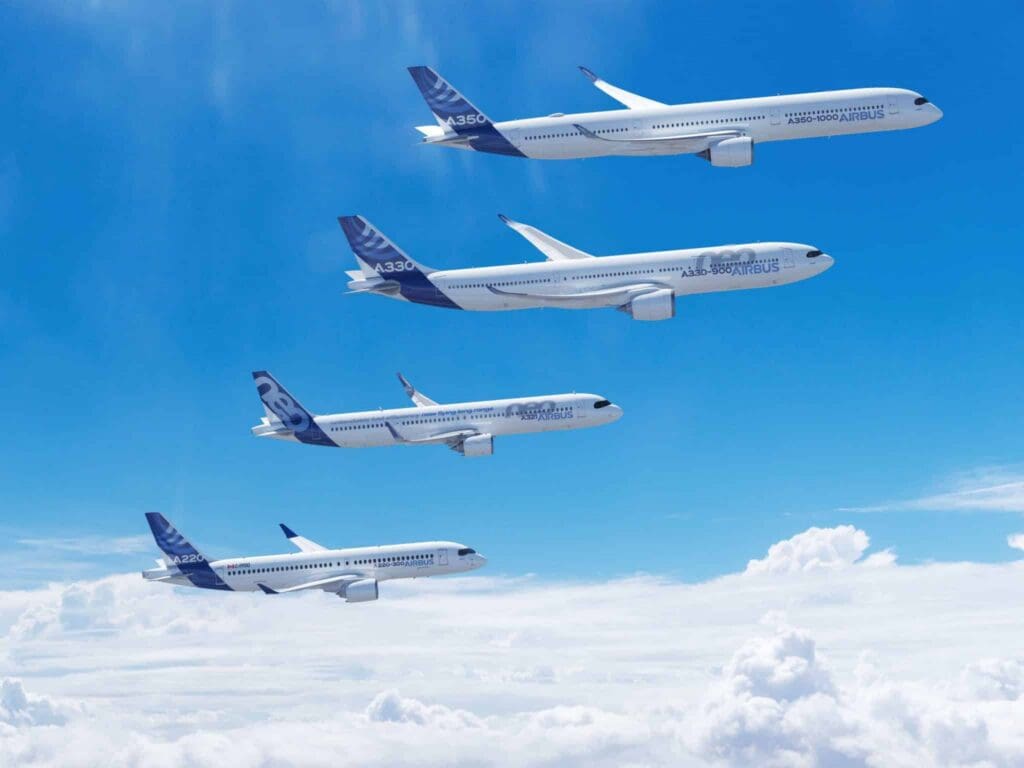
Beyond the dispute with Rolls-Royce, Kirby highlighted a much broader problem facing the airline industry: a severe shortage of available aircraft engines. According to the United CEO, between 800 and 900 commercial aircraft are currently grounded worldwide because of engine-related issues. The majority of the industry’s challenges stem from Pratt & Whitney’s PW1000G geared turbofan engines, which power the Airbus A220, Airbus A320neo family, and Embraer E2 aircraft. However, CFM International LEAP engines and Rolls-Royce Trent engines have also experienced reliability and supply-chain challenges. The result has been a significant mismatch between available aircraft and available engines, forcing airlines around the world to reduce growth plans, delay fleet expansion, and revise capacity forecasts.
The engine crisis has become one of the biggest obstacles facing global aviation as airlines attempt to meet strong post-pandemic demand. Aircraft manufacturers Airbus and Boeing continue to struggle with delivery delays, while engine suppliers work through maintenance backlogs and production constraints. For airlines, the impact is tangible. Fewer available aircraft means reduced capacity, higher operating costs, and less flexibility during peak travel periods.
Kirby also noted that rising fuel prices are adding another layer of pressure. United has already reduced flying by approximately 5% and has raised fares by around 20% in response to higher costs. While he does not believe elevated fuel prices will last long enough to fundamentally reshape the industry, Kirby acknowledged that they are creating additional financial stress.
Anthony’s Take: It’s always interesting when CEOs get into public spats. As airlines continue to battle aircraft shortages, engine maintenance bottlenecks, and rising costs, Kirby’s unusually blunt comments underscore the growing frustration many carriers feel toward suppliers that have become critical chokepoints in the industry’s recovery and future growth.
(Image Credits: United Airlines and Airbus.)
User Generated Content Disclosure: The Bulkhead Seat encourages constructive discussions, comments, and questions. Responses are not provided by or commissioned by any bank advertisers. These responses have not been reviewed, approved, or endorsed by the bank advertiser. It is not the responsibility of the bank advertiser to respond to comments.
Advertiser & Editorial Disclosure: The Bulkhead Seat earns an affiliate commission for anyone approved through the links above This compensation may impact how and where links appear on this site. We work to provide the best publicly available offers to our readers. We frequently update them, but this site does not include all available offers. Opinions, reviews, analyses & recommendations are the author’s alone, and have not been reviewed, endorsed, or approved by any of these entities.


1 comment
I’d feel a lot better about this if ol’ Never-My-Fault Kirby would step outside his glass house before casting stones. All of The Big 3 airlines’ CEO’s have their shortcomings but the others don’t go around blaming everything under the sun (except themselves) for every problem all the time. Additionally, his ongoing series of deluded proclamations doesn’t do much for his image, causing massive credibility issues. In sum, not a good look.