Advertiser & Editorial Disclosure: The Bulkhead Seat earns an affiliate commission for anyone approved through the links below. This compensation may impact how and where links appear on this site. We work to provide the best publicly available offers to our readers. We frequently update them, but this site does not include all available offers. Opinions, reviews, analyses & recommendations are the author’s alone, and have not been reviewed, endorsed, or approved by any of these entities.
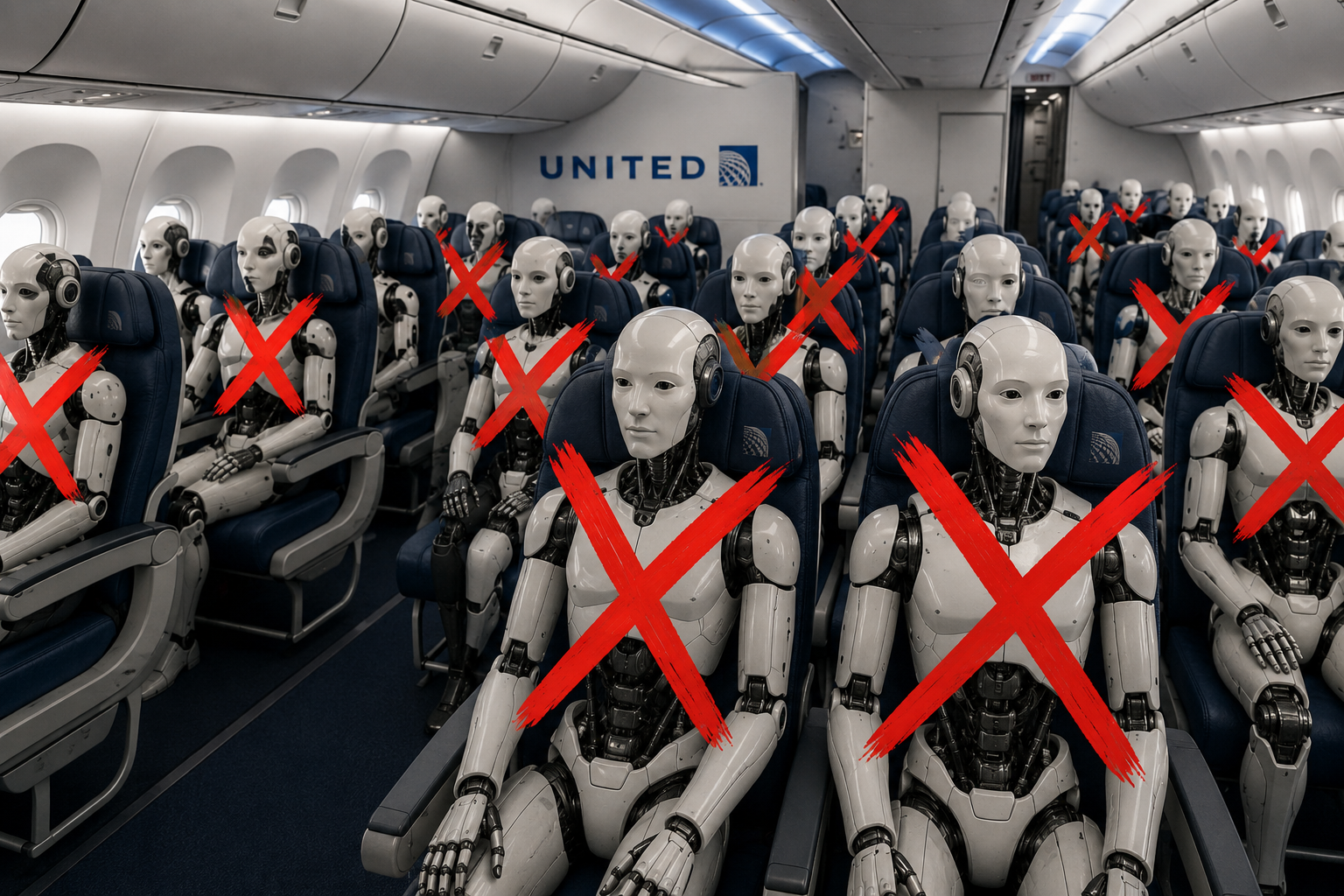
You’re now out of luck if you were planning to bring C-3PO or any of his droid kin onboard a United Airlines flight as the airline has just banned humanoid robots from its aircraft. The airline is one of the first US carriers to explicitly prohibit passengers from traveling with humanoid robots (adding them to its list of restricted items under the airline’s “Dangerous Items” policy).
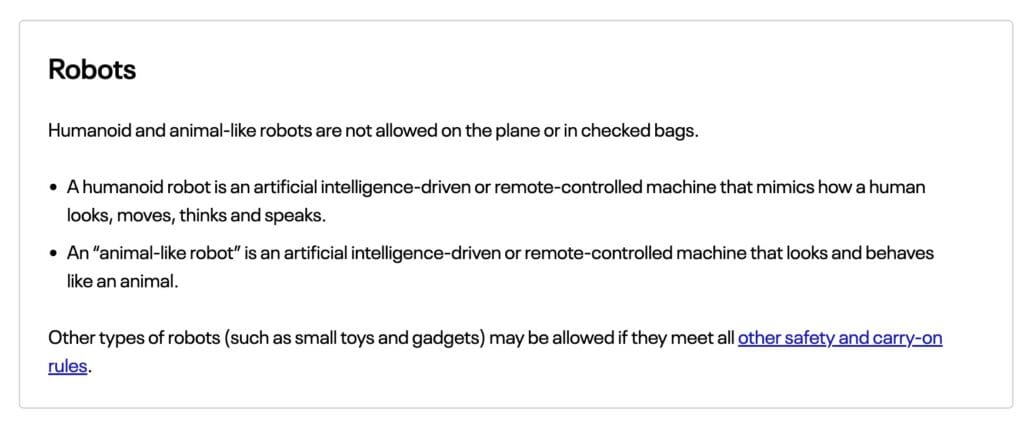
The updated guidance states that humanoid robots are not permitted onboard United-operated flights. This reflects a growing concern among airlines about transporting increasingly sophisticated robots powered by high-capacity lithium-ion batteries and complex electronic systems.
While the airline has not publicly detailed what prompted the policy change, the move comes as humanoid robots are becoming more common outside research labs. Companies are increasingly deploying them in warehouses, manufacturing facilities, and public demonstrations, while some owners have even attempted to transport them as airline passengers.
Unlike laptops, smartphones, and other portable electronics, humanoid robots present unique operational challenges. Many contain large lithium-ion battery packs, numerous electric motors, cameras, sensors, and artificial intelligence hardware. Their size and weight can also complicate cabin storage, emergency evacuations, and baggage handling.
United’s decision aligns with the aviation industry’s broader emphasis on lithium battery safety. Airlines and regulators have steadily tightened restrictions on high-energy battery-powered devices following numerous incidents involving overheating batteries and onboard fires.
As humanoid robotics continues to advance, airlines are likely to face new questions surrounding how these machines should be classified and transported. Existing baggage policies were written for consumer electronics, mobility devices, and conventional luggage (not autonomous machines designed to resemble and interact like humans). Southwest has already instituted its own ban.
These policies signal that commercial aviation is beginning to address a category of passenger belongings that previously existed only in science fiction. Whether other airlines adopt similar restrictions remains to be seen, but Southwest and United’s moves highlight how rapidly evolving technology is forcing carriers to rethink long-standing baggage and safety policies.
Anthony’s Take: For now, travelers planning to fly with a humanoid robot will need to make alternative arrangements, as United has made clear that the devices are not accepted for transport on its aircraft.
(Featured Image Credit: ChatGPT and United Airlines.)
(H/T: Live and Let’s Fly.)
User Generated Content Disclosure: The Bulkhead Seat encourages constructive discussions, comments, and questions. Responses are not provided by or commissioned by any bank advertisers. These responses have not been reviewed, approved, or endorsed by the bank advertiser. It is not the responsibility of the bank advertiser to respond to comments.
Advertiser & Editorial Disclosure: The Bulkhead Seat earns an affiliate commission for anyone approved through the links above This compensation may impact how and where links appear on this site. We work to provide the best publicly available offers to our readers. We frequently update them, but this site does not include all available offers. Opinions, reviews, analyses & recommendations are the author’s alone, and have not been reviewed, endorsed, or approved by any of these entities.