
Advertiser & Editorial Disclosure: The Bulkhead Seat earns an affiliate commission for anyone approved through the links below. This compensation may impact how and where links appear on this site. We work to provide the best publicly available offers to our readers. We frequently update them, but this site does not include all available offers. Opinions, reviews, analyses & recommendations are the author’s alone, and have not been reviewed, endorsed, or approved by any of these entities.
The European Union’s Entry/Exit System (EES) is facing renewed criticism after the head of Rome’s airports warned that the biometric border system may need to be temporarily suspended during the busy summer travel season to prevent severe congestion according to a recent Financial Times article.
The EES, which launched late last year, was intended to modernize border controls by recording the biometric data of non-EU travelers entering and leaving the Schengen Area. The system was expected to be fully operational for all eligible travelers by April 10th, but has faced some snags in the amount of time processing is taking.
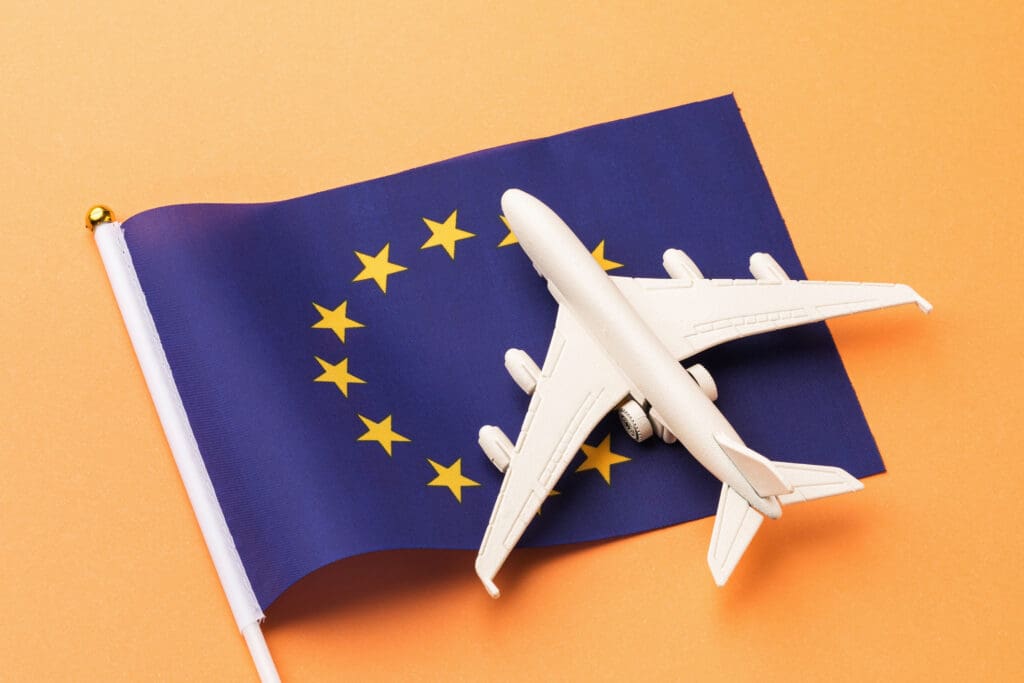
Travelers have experienced lengthy queues with some airports reportedly seeing waits of several hours as border officers and passengers contend with technical issues and slower-than-expected processing times.
The EES is designed to capture fingerprints and facial images the first time a traveler enters the Schengen Area with the data stored for future visits to speed up border crossings. While some travelers have reportedly been exempted from using the system in certain circumstances, implementation has varied between airports. The ongoing challenges are particularly notable given that the project has already faced years of delays before finally entering service.
Many other countries, including Australia, Singapore, Canada, and Mexico have successfully implemented automated biometric border systems for years. This has raised questions about why the EU’s rollout has proven so difficult.
I feel lucky. We landed at London Heathrow Airport (LHR) and transited without going through immigration. When we connected to Paris Charles de Gaulle International Airport (CDG), the process was no different than past visits and we were through in around three minutes.
Anthony’s Take: With Europe’s busiest summer travel season now underway, airports and border authorities will be hoping improvements can be made quickly to prevent long waits from becoming the norm for millions of international travelers.
(H/T: Loyalty Lobby.)
(Image Credits: BeritK and SergeyChayko via iStock.)
User Generated Content Disclosure: The Bulkhead Seat encourages constructive discussions, comments, and questions. Responses are not provided by or commissioned by any bank advertisers. These responses have not been reviewed, approved, or endorsed by the bank advertiser. It is not the responsibility of the bank advertiser to respond to comments.
Advertiser & Editorial Disclosure: The Bulkhead Seat earns an affiliate commission for anyone approved through the links above This compensation may impact how and where links appear on this site. We work to provide the best publicly available offers to our readers. We frequently update them, but this site does not include all available offers. Opinions, reviews, analyses & recommendations are the author’s alone, and have not been reviewed, endorsed, or approved by any of these entities.