Advertiser & Editorial Disclosure: The Bulkhead Seat earns an affiliate commission for anyone approved through the links below. This compensation may impact how and where links appear on this site. We work to provide the best publicly available offers to our readers. We frequently update them, but this site does not include all available offers. Opinions, reviews, analyses & recommendations are the author’s alone, and have not been reviewed, endorsed, or approved by any of these entities.
Concerns about hantavirus have surfaced following a recent cruise ship outbreak, but health experts say airline passengers face very little risk of contracting the virus while flying.
Hantavirus is typically spread through contact with rodent droppings, urine, or saliva and not through casual human interaction. While the Andes strain (linked to the recent outbreak) can spread between people, experts emphasize that this form is extremely rare and not endemic in the United States.
Aircraft cabins also offer an additional layer of protection. Modern airplanes use advanced air circulation systems, including HEPA filtration, which rapidly refresh and clean cabin air to significantly reduce the risk of airborne transmission of illnesses.
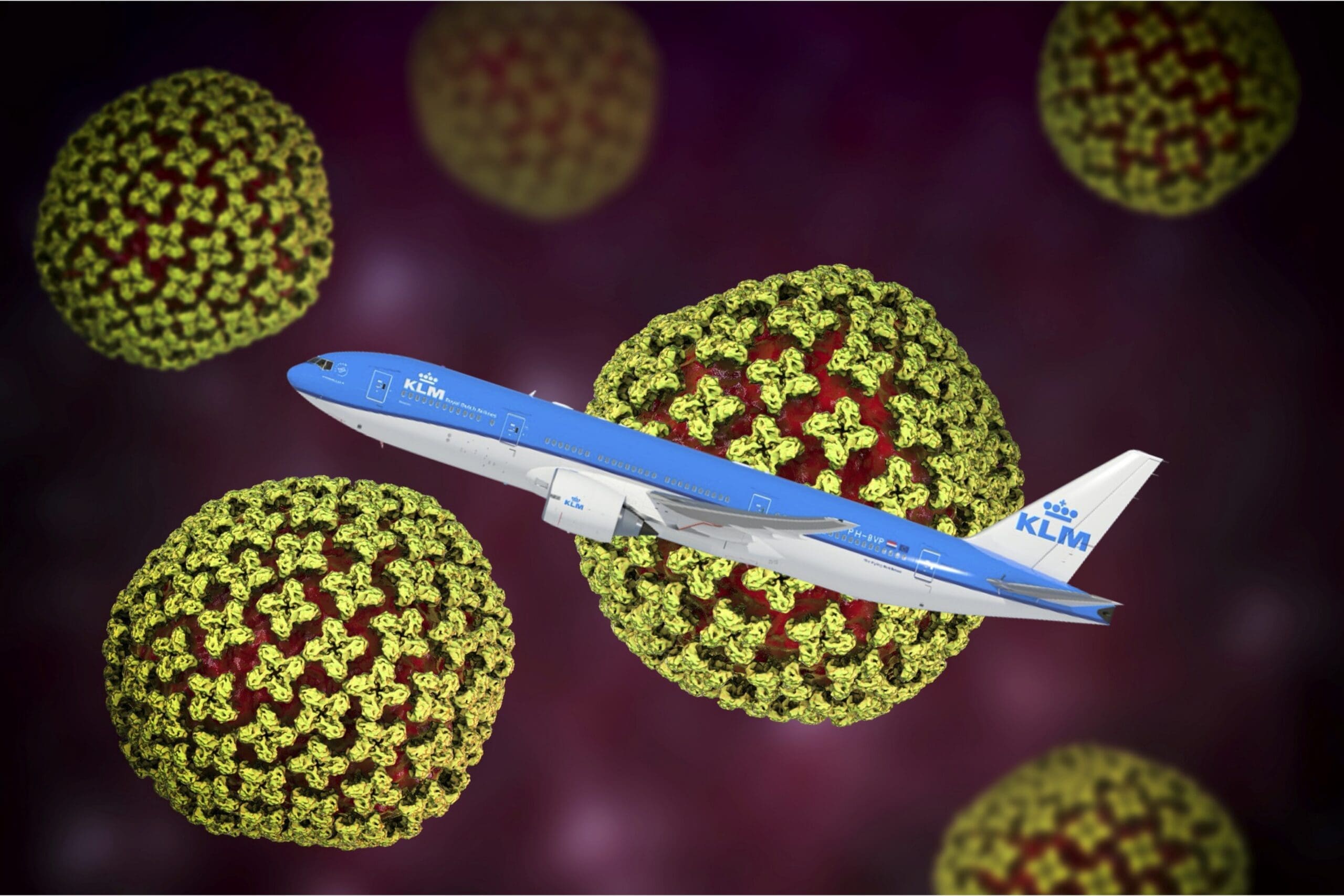
The current concerns gained attention after a passenger later identified with the Andes strain briefly boarded a KLM Royal Dutch Airlines flight from Johannesburg’s O.R. Tambo International Airport (JNB) to Amsterdam Airport Schiphol (AMS). The passenger appeared visibly ill and was removed before departure. She was later hospitalized and died the following day. Dutch health authorities have since initiated contact tracing for passengers on the flight.
While the risk remains extremely low, experts say travelers can take simple steps for added peace of mind:
- Keep overhead air vents open to improve airflow
- Practice good hand hygiene (use hand sanitizer and wash them frequently)
- Consider moving seats if seated near someone visibly ill
These precautions are similar to those widely adopted during the COVID-19 pandemic.
Anthony’s Take: Despite heightened awareness due to recent events, the likelihood of catching hantavirus on a flight is exceptionally low. With modern aircraft filtration systems and the nature of how the virus spreads, flying remains a safe mode of travel for the vast majority of passengers.
(Featured Image Credit: Dr_Microbe via iStock and KLM.)
User Generated Content Disclosure: The Bulkhead Seat encourages constructive discussions, comments, and questions. Responses are not provided by or commissioned by any bank advertisers. These responses have not been reviewed, approved, or endorsed by the bank advertiser. It is not the responsibility of the bank advertiser to respond to comments.
Advertiser & Editorial Disclosure: The Bulkhead Seat earns an affiliate commission for anyone approved through the links above This compensation may impact how and where links appear on this site. We work to provide the best publicly available offers to our readers. We frequently update them, but this site does not include all available offers. Opinions, reviews, analyses & recommendations are the author’s alone, and have not been reviewed, endorsed, or approved by any of these entities.


2 comments
I wish more information was readily available but so far you’ve got more than anyone else so thanks for useful info.
Here we go again… panic over nothing. In 2 weeks this will be a complete non-issue.