Advertiser & Editorial Disclosure: The Bulkhead Seat earns an affiliate commission for anyone approved through the links below. This compensation may impact how and where links appear on this site. We work to provide the best publicly available offers to our readers. We frequently update them, but this site does not include all available offers. Opinions, reviews, analyses & recommendations are the author’s alone, and have not been reviewed, endorsed, or approved by any of these entities.
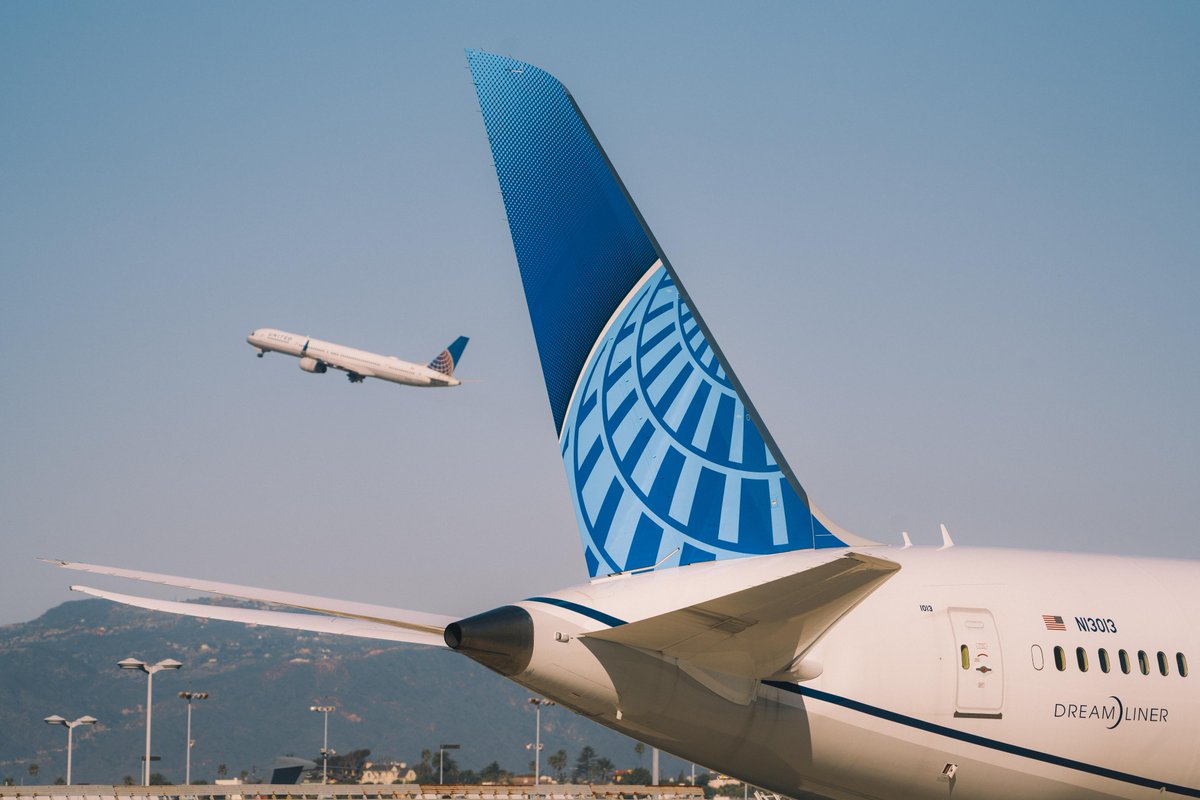
United Airlines’ newest Boeing 787-9 continues to experience technical problems despite spending more than a week back at Boeing for repairs. The aircraft is the first Boeing 787-9 in United’s fleet to feature the airline’s new United Elevated cabin, which including Polaris Studio suites, redesigned Polaris® Business Class seats, upgraded Premium Plus cabins, and refreshed Economy Class interiors. It also carries United’s special 100th anniversary decal.
This Boeing 787-9 has been plagued by maintenance issues since entering commercial service earlier this year. Its first international flight to Singapore Changi Airport (SIN) ended with a maintenance problem that forced the aircraft to divert before it was ferried without passengers back to San Francisco International Airport (SFO) for inspection. Over the following weeks, the aircraft continued to experience repeated technical issues, spending more time on the ground than flying.
On June 20th, United sent the aircraft to Boeing’s maintenance facility in Moses Lake (MWH), WA after airline technicians were unable to resolve the recurring problems. Following roughly 10 days of repairs, the aircraft returned to San Francisco on June 30th and was cleared to resume passenger service.
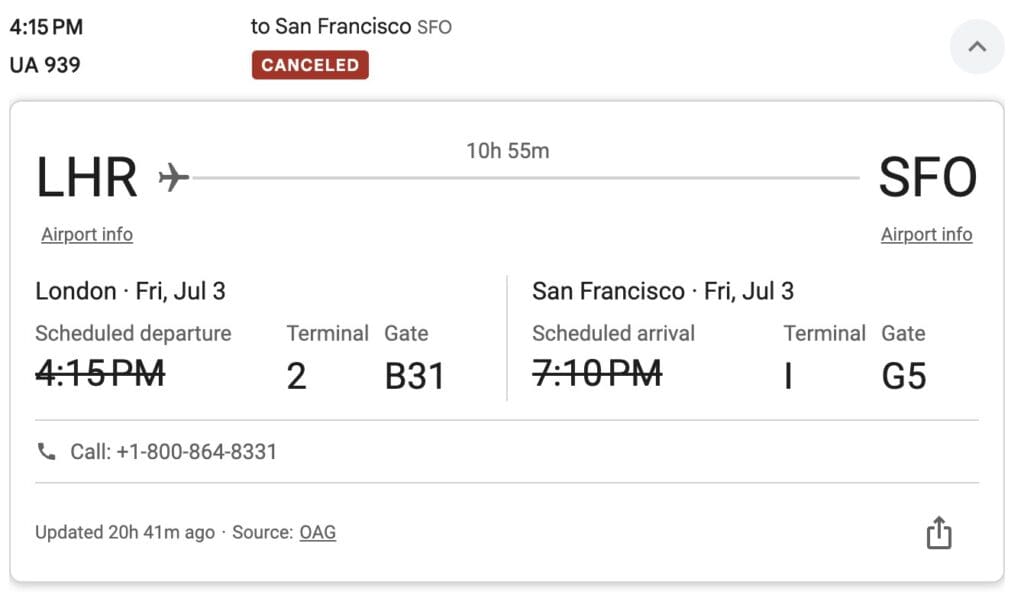
Unfortunately, the fix appears to have been short-lived. The aircraft successfully operated a flight from San Francisco to London Heathrow Airport (LHR) on July 2nd, but its scheduled return flight the following day was canceled because of another maintenance issue. The aircraft is now expected to be ferried back to San Francisco International Airport (SFO) without passengers for additional troubleshooting.
According to @JonNYC, the recurring problem involves the aircraft’s Traffic Collision Avoidance System (TCAS). This is a critical safety system that alerts pilots to nearby aircraft and provides instructions to help prevent midair collisions. Reports indicate Boeing replaced both TCAS antennas while the aircraft was at Moses Lake, but the latest disruption suggests the underlying issue has not been fully resolved.
Although modern airliners feature multiple layers of redundancy and extensive testing before returning to service, the aircraft’s repeated technical problems have prompted additional scrutiny of what appears to be a persistent fault.
While new aircraft occasionally experience minor issues as they enter service, the number of maintenance events involving this particular one has been unusually high. For United, the repeated disruptions have complicated the rollout of its flagship premium cabin product. For Boeing, the issues add to ongoing questions surrounding production quality and reliability as airlines continue taking delivery of new aircraft.
Anthony’s Take: Neither United nor Boeing has publicly detailed the exact nature of the fault or provided a timeline for when the aircraft is expected to return to regular passenger service.
(Image Credits: United and FlightAware.)
User Generated Content Disclosure: The Bulkhead Seat encourages constructive discussions, comments, and questions. Responses are not provided by or commissioned by any bank advertisers. These responses have not been reviewed, approved, or endorsed by the bank advertiser. It is not the responsibility of the bank advertiser to respond to comments.
Advertiser & Editorial Disclosure: The Bulkhead Seat earns an affiliate commission for anyone approved through the links above This compensation may impact how and where links appear on this site. We work to provide the best publicly available offers to our readers. We frequently update them, but this site does not include all available offers. Opinions, reviews, analyses & recommendations are the author’s alone, and have not been reviewed, endorsed, or approved by any of these entities.