Advertiser & Editorial Disclosure: The Bulkhead Seat earns an affiliate commission for anyone approved through the links below. This compensation may impact how and where links appear on this site. We work to provide the best publicly available offers to our readers. We frequently update them, but this site does not include all available offers. Opinions, reviews, analyses & recommendations are the author’s alone, and have not been reviewed, endorsed, or approved by any of these entities.
The ongoing partial government shutdown is beginning to place significant strain on airport operations across the United States as Transportation Security Administration (TSA) officers continue working without pay. With many federal employees missing multiple paychecks, increasing numbers of TSA screeners are calling in sick or leaving their positions altogether. This raises concerns about airport security wait times and staffing stability in the long run.
Recent data shows a sharp increase in unscheduled absences among TSA officers. On Sunday, March 15th, about 10% of TSA officers nationwide called in sick (roughly 5x the typical rate of about 2%).
Some airports are experiencing even more severe staffing shortages. At William P. Hobby Airport (HOU), more than half of TSA screeners reportedly called in sick on March 15th (reaching 55% of the workforce). That figure rose from 41% the previous Sunday, which highlights a rapidly worsening situation. The trend appears to be accelerating, particularly during weekends and the busy spring break travel period when childcare demands may be higher for workers who are not currently receiving pay.
In addition to increased sick calls, the shutdown has also triggered departures from the TSA workforce. According to the Department of Homeland Security, more than 300 TSA officers have resigned since the shutdown began. With approximately 50,000 TSA officers nationwide, that represents a relatively small share. However, combined with growing absenteeism, the resignations are adding pressure to an already strained system. Union leaders say the situation is not surprising. Everett Kelley, National President of the American Federation of Government Employees, which represents more than 46,000 TSA workers, noted that employees are being asked to continue reporting for duty despite missing paychecks for weeks.
Government officials have also made this a political issue and worked to frame Democrats as the reason why there were no paychecks.
The staffing shortages are already affecting travelers at some airports. Security wait times have stretched significantly in certain locations, particularly at large hubs during peak travel periods.
At Hartsfield-Jackson Atlanta International Airport (ATL) and Houston’s George Bush Intercontinental Airport (IAH), wait times recently approached two hours at certain points as spring break travel combined with winter weather disruptions.
The situation in Houston looked like a scene from a natural disaster with stranded passengers sleeping on cots.
Video taken at Austin-Bergstrom International Airport (AUS) yesterday showed security lines snaking outside and around the parking lot was early as 4:30 AM.
However, the impact remains uneven across the country. Some travelers have reported moving through security checkpoints in just a few minutes depending on the airport and time of day. One factor that differentiates the current shutdown from previous ones is that air traffic controllers are still receiving pay. TSA officers fall under the Department of Homeland Security (DHS), which currently lacks funding, while air traffic controllers are employed by the Department of Transportation (DOT), which remains funded.
In past shutdowns, aviation disruptions escalated quickly when air traffic controllers also began missing paychecks. The absence of that factor may be slowing the broader impact on the aviation system this time.
The growing disruption has prompted airline executives to call for action. In a letter sent to lawmakers, the chief executives of several major carriers (including American Airlines, Delta Air Lines, Southwest Airlines, and JetBlue Airways) urged Congress to restore funding for the DHS. The airlines also asked lawmakers to pursue a bipartisan solution that would ensure federal aviation workers continue receiving pay during future shutdowns.
Although the system continues to operate, the rising number of sick calls and resignations is raising concerns about how long airports can sustain current staffing levels if the shutdown continues. If absenteeism continues to increase at the current pace, some aviation observers warn that certain airports could eventually face severe operational disruptions, particularly during peak travel periods.
Anthony’s Take: For now, travelers may encounter inconsistent security wait times depending on staffing levels at their departure airport as the shutdown continues to affect thousands of federal workers responsible for keeping the nation’s airports running. Throw Spring Break into the mix and this is one chaotic time to travel.
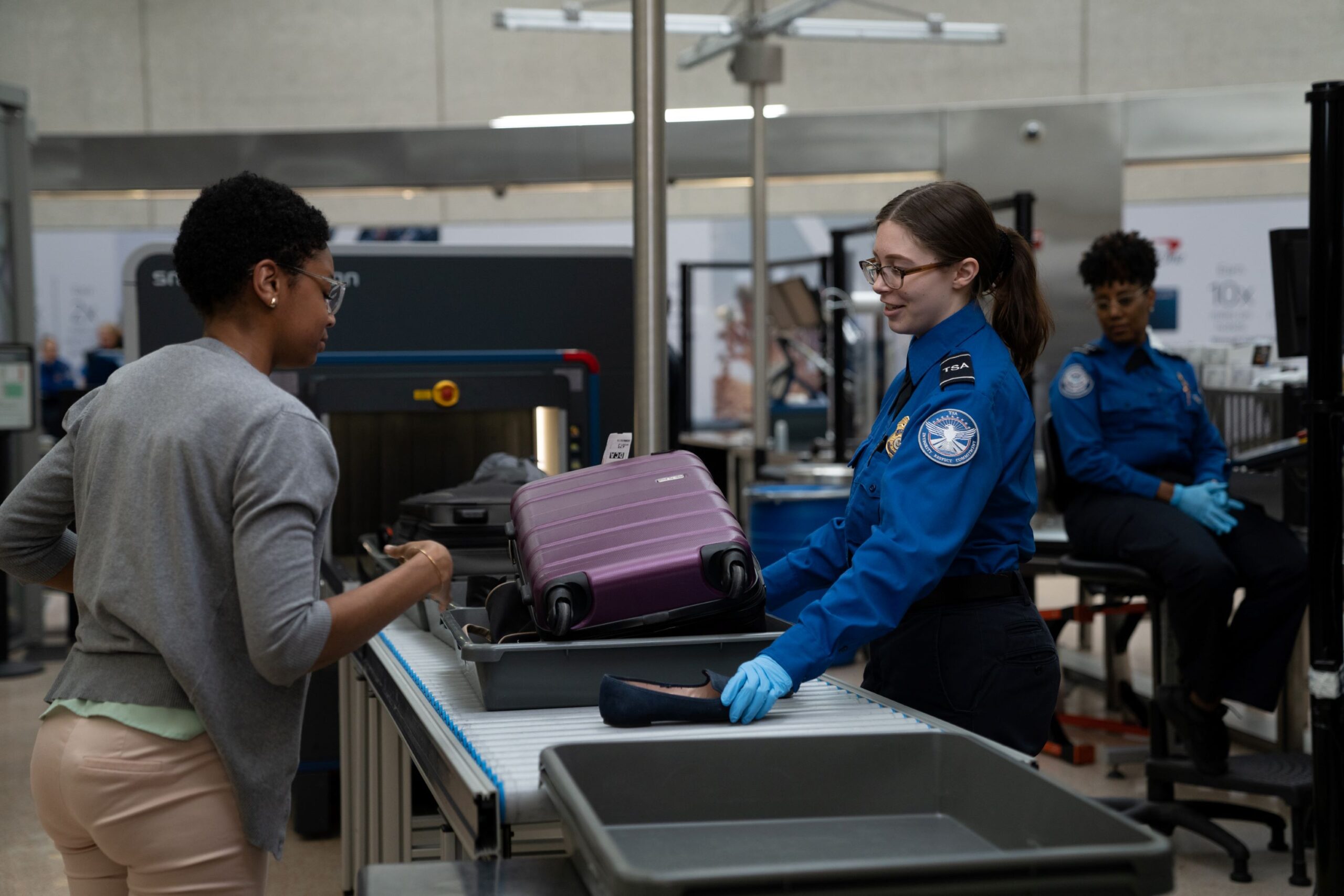
(Featured Image Credit: Transportation Security Administration.)
User Generated Content Disclosure: The Bulkhead Seat encourages constructive discussions, comments, and questions. Responses are not provided by or commissioned by any bank advertisers. These responses have not been reviewed, approved, or endorsed by the bank advertiser. It is not the responsibility of the bank advertiser to respond to comments.
Advertiser & Editorial Disclosure: The Bulkhead Seat earns an affiliate commission for anyone approved through the links above This compensation may impact how and where links appear on this site. We work to provide the best publicly available offers to our readers. We frequently update them, but this site does not include all available offers. Opinions, reviews, analyses & recommendations are the author’s alone, and have not been reviewed, endorsed, or approved by any of these entities.