Advertiser & Editorial Disclosure: The Bulkhead Seat earns an affiliate commission for anyone approved through the links below. This compensation may impact how and where links appear on this site. We work to provide the best publicly available offers to our readers. We frequently update them, but this site does not include all available offers. Opinions, reviews, analyses & recommendations are the author’s alone, and have not been reviewed, endorsed, or approved by any of these entities.
Last night, I wrote about the Federal Aviation Administration (FAA) temporarily halting flights at several major airports in Washington, DC and the surrounding area after a strong chemical odor affected air traffic controllers. Ground stops were issued at Ronald Reagan Washington National Airport (DCA), Washington Dulles International Airport (IAD), and Baltimore/Washington International Thurgood Marshall Airport (BWI) while officials investigated the source of the smell. They resumed operations Friday night after the strong odor was traced to an overheated circuit board at a key air traffic control facility.
According to the FAA, the issue occurred at the Potomac Terminal Radar Approach Control facility, known as TRACON, which is located in Northern Virginia. The facility manages aircraft operating within roughly 30 to 50 miles of major airports in the region.
The incident triggered temporary ground stops at several airports including Ronald Reagan Washington National Airport (DCA), Washington Dulles International Airport (IAD), and Baltimore/Washington International Thurgood Marshall Airport (BWI). Air traffic operations were also halted at Richmond International Airport (RIC) in Virginia because the same TRACON facility manages arrivals and departures for that airport as well. Flights were paused while officials investigated the source of the odor, which was reported to be affecting some air traffic controllers working inside the facility.
Sean Duffy, the US transportation secretary, said the smell was ultimately traced to an overheated circuit board at the control facility. The faulty component has since been replaced. Once the equipment was repaired, normal operations gradually resumed at the affected airports. Although flights were allowed to resume, travelers were warned that delays could continue for several hours as airlines worked to recover from the disruption. Ground stops and traffic management programs can cause ripple effects across the national airspace system, particularly in busy regions such as the Washington metropolitan area.
The disruption also occurred during a period of heightened security awareness in the United States. Officials have been monitoring potential threats linked to the ongoing conflict involving Iran as well as a recent attempted attack targeting a synagogue in Michigan. While the airport shutdown was ultimately determined to be caused by an equipment malfunction, the unusual odor initially prompted caution among aviation officials and controllers responsible for managing aircraft traffic in one of the country’s busiest airspace corridors.
Anthony’s Take: I’m glad this was nothing more serious or sinister. After the circuit board was replaced and the facility cleared, normal air traffic operations resumed across the Washington area.
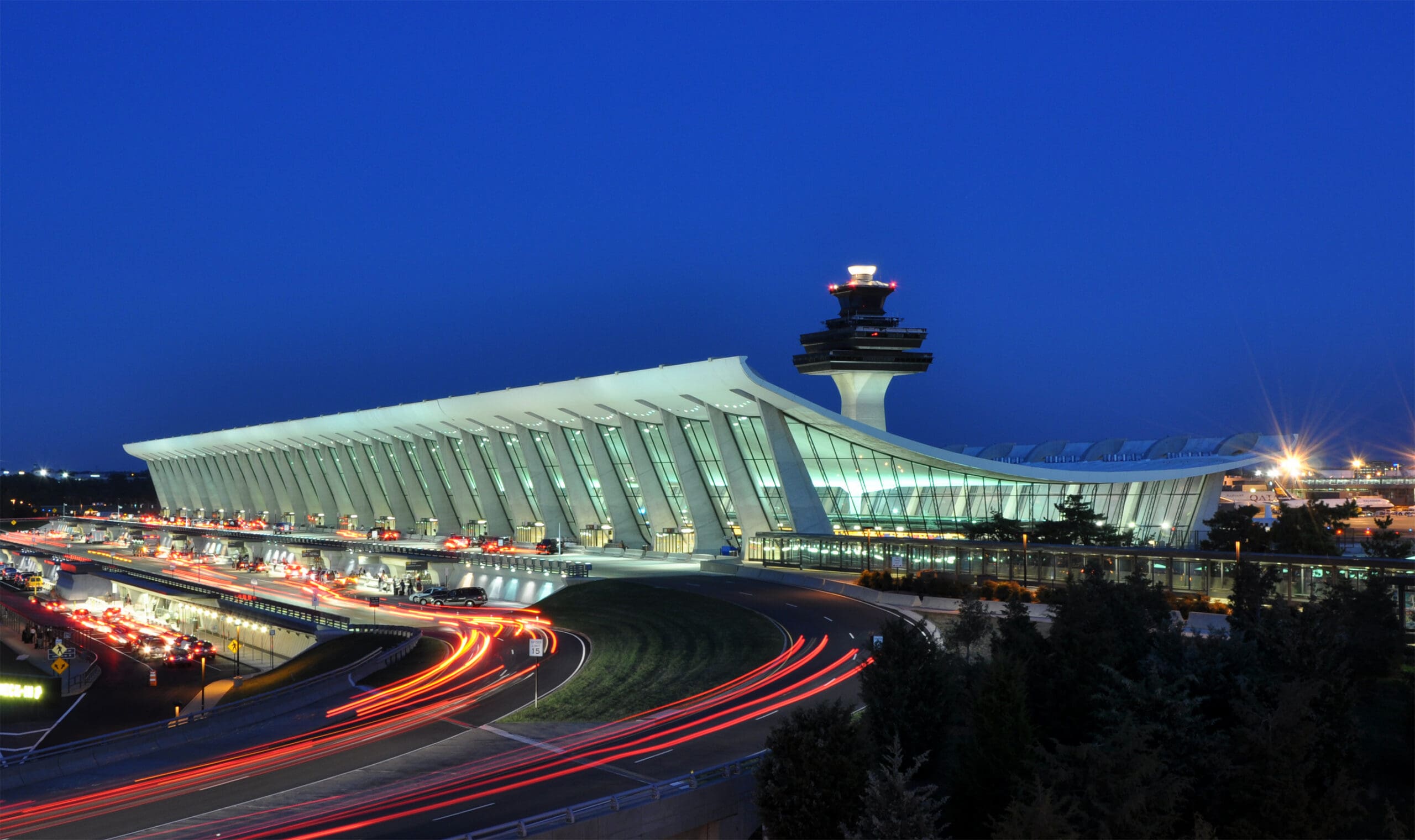
(Featured Image Credit: Washington Dulles International Airport.)
User Generated Content Disclosure: The Bulkhead Seat encourages constructive discussions, comments, and questions. Responses are not provided by or commissioned by any bank advertisers. These responses have not been reviewed, approved, or endorsed by the bank advertiser. It is not the responsibility of the bank advertiser to respond to comments.
Advertiser & Editorial Disclosure: The Bulkhead Seat earns an affiliate commission for anyone approved through the links above This compensation may impact how and where links appear on this site. We work to provide the best publicly available offers to our readers. We frequently update them, but this site does not include all available offers. Opinions, reviews, analyses & recommendations are the author’s alone, and have not been reviewed, endorsed, or approved by any of these entities.