Advertiser & Editorial Disclosure: The Bulkhead Seat earns an affiliate commission for anyone approved through the links below. This compensation may impact how and where links appear on this site. We work to provide the best publicly available offers to our readers. We frequently update them, but this site does not include all available offers. Opinions, reviews, analyses & recommendations are the author’s alone, and have not been reviewed, endorsed, or approved by any of these entities.
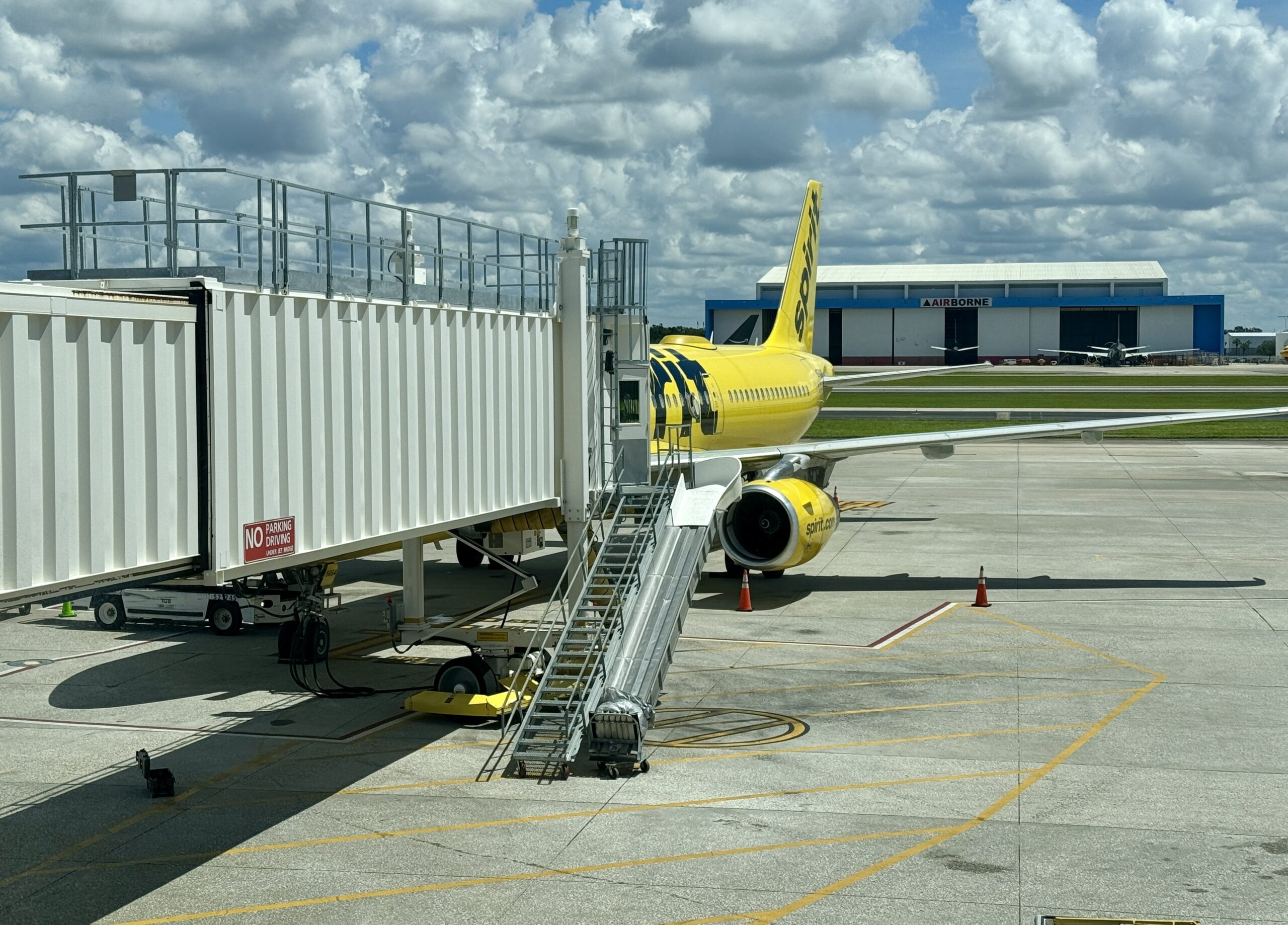
I’m a little sad this morning as I had honestly been a fan of Spirit Airlines and its Big Front Seats. After 34 years in business, the low-cost carrier has permanently ceased operations. This marks one of the most significant airline shutdowns in the United States in decades. As I wrote about yesterday, the airline confirmed that it stopped flying at 3:00 AM EST.
Spirit noted pride in its role shaping the ultra-low-cost model, even as it acknowledged that it could no longer continue. It released the following statement:
It is with great disappointment that on May 2, 2026, Spirit Airlines started an orderly wind-down of our operations, effective immediately. To our Guests: all flights have been cancelled, and customer service is no longer available. We are proud of the impact of our ultra-low-cost model on the industry over the last 34 years and had hoped to serve our Guests for many years to come.”
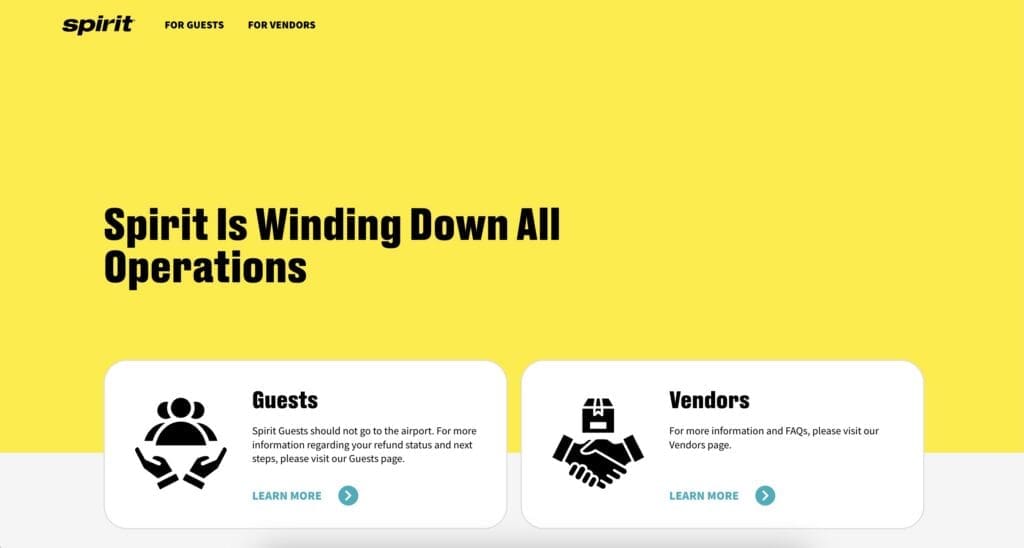
A microsite has been created with information for guests and vendors.
Spirit’s closure is notable not just for its scale, but for its rarity. The last notable US airline shutdown was Independence Air in 2006 and I barely remember anything about them. Spirit’s collapse follows months of financial distress. The airline had entered Chapter 11 bankruptcy twice in two years and had not turned a profit in seven years. Rising jet fuel prices further accelerated its cash burn and pushed the company over the edge.
In a last-ditch effort to survive, Spirit pursued a $500 million government bailout backed by President Donald Trump. The proposal would have given taxpayers a 90% ownership stake in the airline. However, the plan ultimately failed. Bondholders opposed the deal as it would have placed the government ahead of them in priority for Spirit’s remaining assets. With little chance of returning to profitability, creditors saw no incentive to support the bailout. Without new funding and with cash reserves depleted, Spirit had no viable path forward.
Spirit’s disappearance leaves a major void in several markets, particularly at Fort Lauderdale-Hollywood International Airport (FLL), which served as the airline’s largest base. Competitors such as JetBlue Airways and Frontier Airlines are expected to move quickly to capture displaced demand. There is also speculation that larger carriers could expand operations in South Florida to take advantage of the opening. While the loss reduces competition in the short term, it could lead to a more financially stable airline landscape overall.
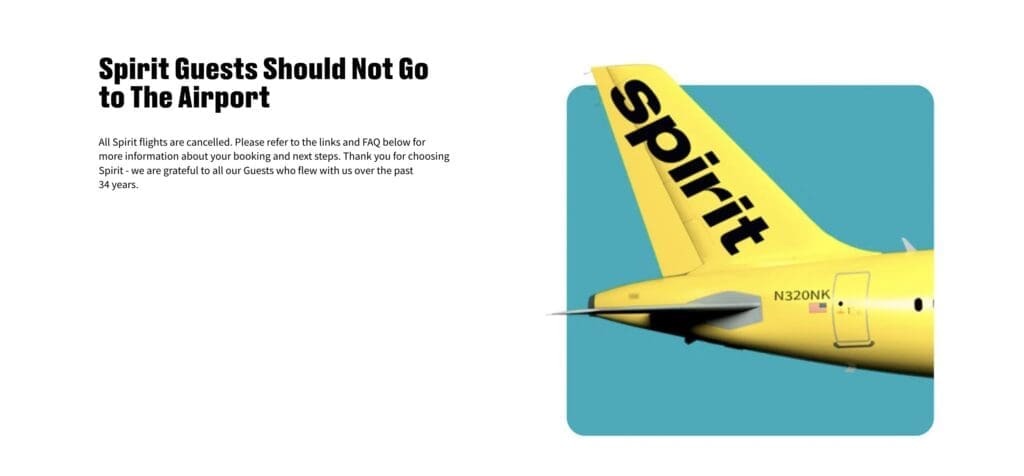
Spirit Airlines’ business model helped reshape the industry by making air travel more accessible to budget-conscious travelers. However, years of losses, rising costs, and changes to customer preferences (people want more amenities) ultimately proved insurmountable.
Anthony’s Take: Spirit Airlines has officially shut down after exhausting all options for survival. While the airline’s low-cost legacy will endure, its collapse underscores the difficulty of sustaining prolonged financial losses in a volatile industry. The coming weeks will reveal how competitors respond and how quickly the market adapts to fill the void left behind. Hopefully, all of the impacted employees are able to find roles with other carriers.
(Image Credit: Spirit Airlines.)
User Generated Content Disclosure: The Bulkhead Seat encourages constructive discussions, comments, and questions. Responses are not provided by or commissioned by any bank advertisers. These responses have not been reviewed, approved, or endorsed by the bank advertiser. It is not the responsibility of the bank advertiser to respond to comments.
Advertiser & Editorial Disclosure: The Bulkhead Seat earns an affiliate commission for anyone approved through the links above This compensation may impact how and where links appear on this site. We work to provide the best publicly available offers to our readers. We frequently update them, but this site does not include all available offers. Opinions, reviews, analyses & recommendations are the author’s alone, and have not been reviewed, endorsed, or approved by any of these entities.