Advertiser & Editorial Disclosure: The Bulkhead Seat earns an affiliate commission for anyone approved through the links below. This compensation may impact how and where links appear on this site. We work to provide the best publicly available offers to our readers. We frequently update them, but this site does not include all available offers. Opinions, reviews, analyses & recommendations are the author’s alone, and have not been reviewed, endorsed, or approved by any of these entities.
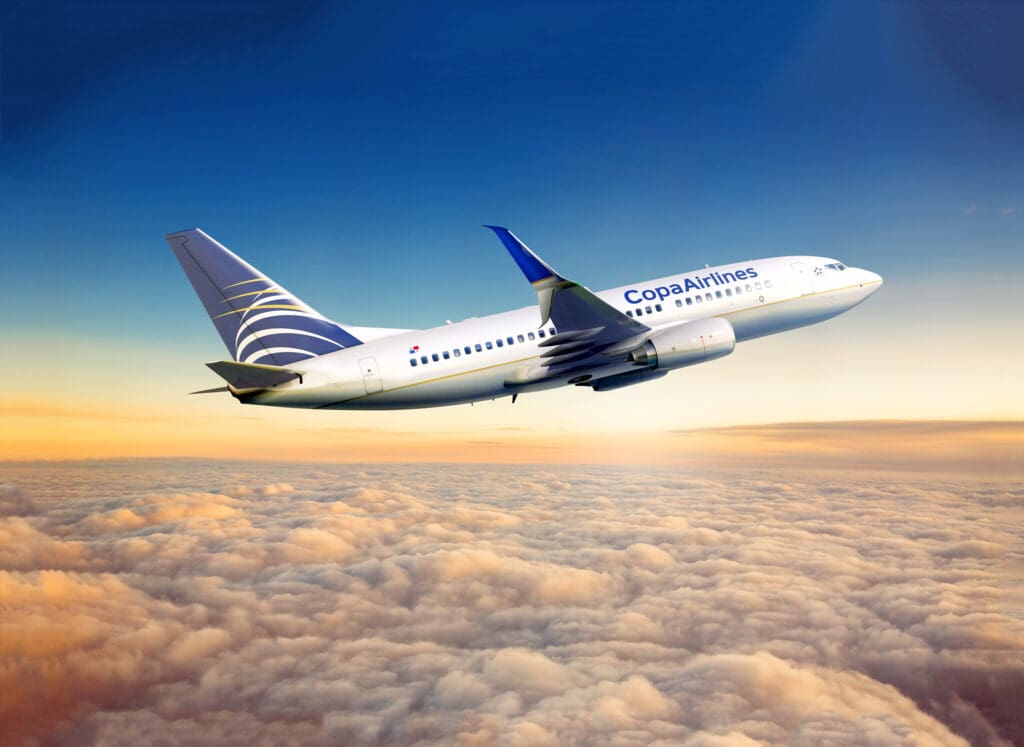
Copa Airlines is set to become the first airline in Latin America to roll out free Starlink-powered inflight Wi-Fi across its fleet of Boeing 737 aircraft. The Panama-based carrier confirmed it will begin installing the high-speed, low-latency satellite internet service across in the coming months with a goal of equipping most flights by October. This is huge since Copa currently does not offer Wi-Fi at all.
Until now, Copa had stood out as the only major Latin American airline with a continental network that did not offer inflight Wi-Fi. While competitors such as LATAM and Avianca have expanded their connectivity offerings in recent years, Copa had held back. The introduction of onboard Wi-Fi brings the airline in line with global trends where connectivity is no longer viewed as a luxury but as a core part of the travel experience.
By adopting Starlink’s low-Earth orbit satellite technology, Copa is positioning itself to deliver a step-change in onboard connectivity. The system enables faster speeds and lower latency compared to traditional satellite solutions. This allows passengers to stream content, browse the internet, and work online with greater reliability. This upgrade is especially relevant across Copa’s network of more than 80 destinations throughout the Americas where flights can last up to seven hours on its Boeing 737 aircraft. Travelers increasingly expect to stay connected for both productivity and entertainment during these journeys.
Copa’s decision places it among a growing number of airlines worldwide adopting Starlink as the new benchmark for inflight connectivity. Carriers across North America, Europe, Asia, and the Middle East are rapidly embracing the technology as demand for seamless digital experiences continues to rise. Copa’s Star Alliance partner, United Airlines, is also equipping its fleet with Starlink.
The airline plans a phased installation across its fleet, but expects a majority of flights to feature the new Wi-Fi service by October. The accelerated timeline reflects both the maturity of Starlink’s technology and the urgency for airlines to meet evolving customer expectations.
Copa’s move is likely to influence the broader Latin American aviation market, where inflight connectivity has historically lagged behind other regions. By introducing high-performance Wi-Fi, the airline is raising the bar for competitors and redefining what passengers can expect when flying across the Americas.
Anthony’s Take: No Wi-Fi has been one of my biggest complaints about Copa. As the rollout progresses, attention will shift to how effectively the service is implemented and how it enhances the overall travel experience. What is already clear is that this marks a pivotal moment not only for Copa Airlines, but for inflight connectivity across Latin America.
(Image Credits: Copa Airlines.)
User Generated Content Disclosure: The Bulkhead Seat encourages constructive discussions, comments, and questions. Responses are not provided by or commissioned by any bank advertisers. These responses have not been reviewed, approved, or endorsed by the bank advertiser. It is not the responsibility of the bank advertiser to respond to comments.
Advertiser & Editorial Disclosure: The Bulkhead Seat earns an affiliate commission for anyone approved through the links above This compensation may impact how and where links appear on this site. We work to provide the best publicly available offers to our readers. We frequently update them, but this site does not include all available offers. Opinions, reviews, analyses & recommendations are the author’s alone, and have not been reviewed, endorsed, or approved by any of these entities.