Advertiser & Editorial Disclosure: The Bulkhead Seat earns an affiliate commission for anyone approved through the links below. This compensation may impact how and where links appear on this site. We work to provide the best publicly available offers to our readers. We frequently update them, but this site does not include all available offers. Opinions, reviews, analyses & recommendations are the author’s alone, and have not been reviewed, endorsed, or approved by any of these entities.
Last night, President Trump sparked confusion across the aviation industry after posting on social media that all aircraft produced in Canada had been “decertified” from operating in the United States. As written, the claim suggested an immediate and sweeping ban with potentially massive consequences for US commercial airlines, business aviation, and regional air service.
Within hours, White House officials walked back the statement, saying the president’s remarks were not meant to apply to aircraft already in service. According to the clarification, the proposed action would only affect newly produced Canadian-built aircraft going forward. Even with that narrower interpretation, the situation remains puzzling and legally murky.
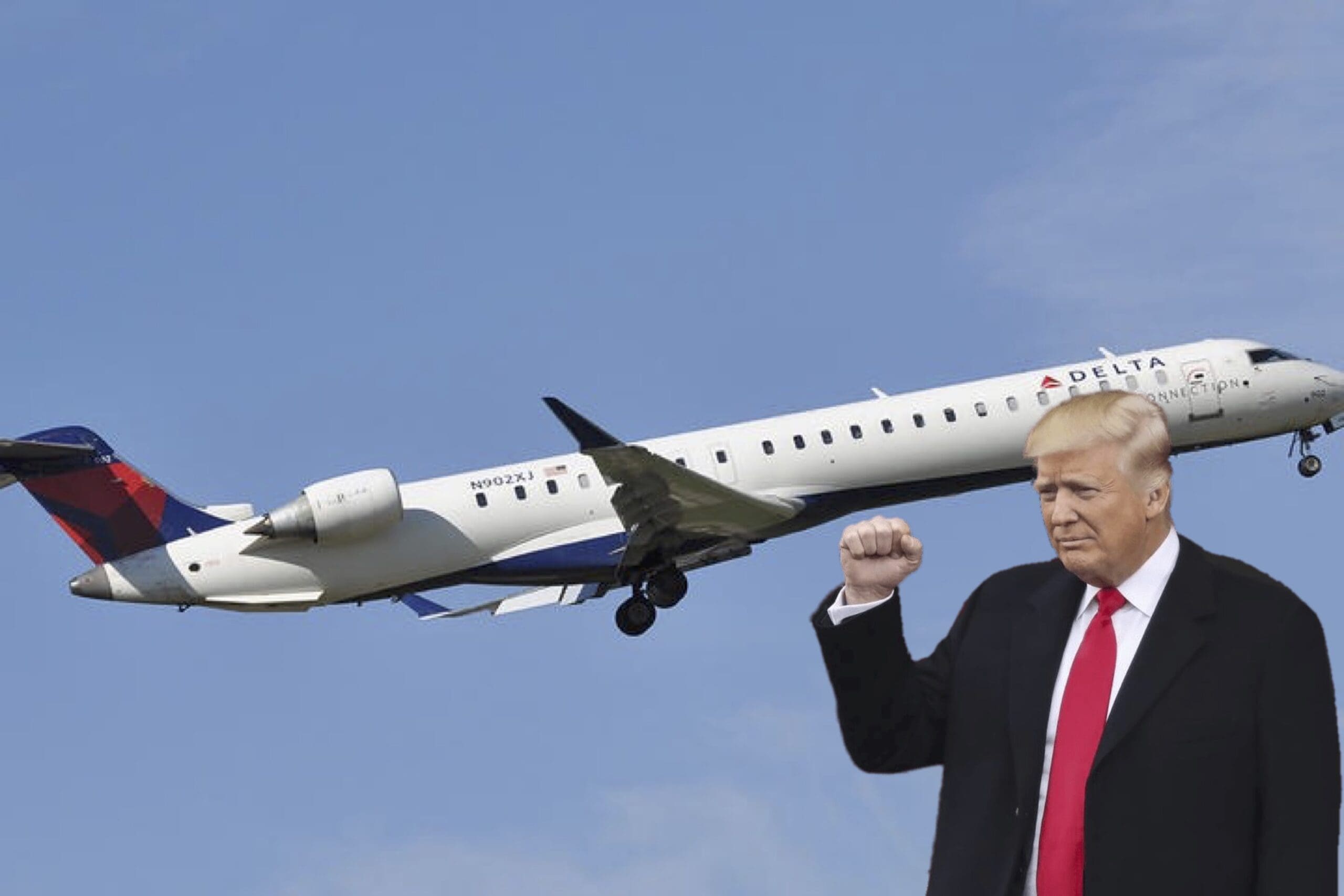
Had the original statement been valid, the fallout would have been intense. More than 5,000 aircraft currently operating in the United States were manufactured in Canada (including the majority of Bombardier’s planes). That includes not only Global Express business jets, but also large numbers of regional aircraft such as the CRJ-200, CRJ-700, and CRJ-900, which form the backbone of many American Eagle, Delta Connection, and United Express routes. Grounding those aircraft would have caused immediate and widespread disruption.
The revised explanation does little to make the policy more coherent. Aircraft certification in the United States is overseen by the Federal Aviation Administration (FAA) and certification is tied to safety (not trade disputes or political leverage). Aircraft types are certified as a whole, not selectively based on delivery date, making the idea of decertifying only newly built aircraft incompatible with how the system is designed to function.
The episode raises broader concerns about how consequential policy statements are being communicated. Aviation certification is governed by formal processes, international agreements, and technical evaluations. Using social media to announce actions that could impact millions of passengers, thousands of flights, and major segments of the economy creates confusion that lingers even after clarifications are issued.
Trump’s comments also referenced frustration with Canada’s delay in certifying certain new Gulfstream aircraft. While the FAA has approved some of these jets, Canadian regulators have not yet followed suit. The reasons for the delay have not been made public, but industry observers point to a more cautious global regulatory environment following the Boeing 737 MAX crisis. Foreign authorities are no longer as willing to automatically accept FAA findings. In the Gulfstream case, reports suggest the issue may involve deicing system concerns where the FAA granted exemptions that other regulators are still reviewing.
For now, no concrete enforcement mechanism has been outlined for how Canadian-built aircraft would be decertified going forward or how a 50% tariff threat would be implemented. Past statements on unrelated issues, such as claims about capping credit card interest rates, have not resulted in observable regulatory action. This leaves skepticism about whether this latest declaration will translate into policy.
Bombardier replied to the President’s comments with the following statement:
We have taken note of the post from the President of the United States to social media and are in contact with the Canadian government. Bombardier is an international company that employs more than 3,000 people in the U.S. across 9 major facilities, and creates thousands of U.S. jobs through 2,800 suppliers. Our aircraft, facilities and technicians are fully certified to FAA standards and renowned around the world. We are actively investing in expanding our U.S. operations, including a recent announcement in Fort Wayne, Indiana.
Thousands of private and civilian jets built in Canada fly in the U.S. every day. We hope this is quickly resolved to avoid a significant impact to air traffic and the flying public.”
Anthony’s Take: What remains clear is that the initial claim of a blanket decertification was incorrect and the subsequent clarification has introduced more questions than answers. Aircraft certification is not designed to be used as a bargaining chip and attempts to frame it that way risk undermining confidence in the system.
(Featured Image Credit: Delta Air Lines and Nice PNG.)
User Generated Content Disclosure: The Bulkhead Seat encourages constructive discussions, comments, and questions. Responses are not provided by or commissioned by any bank advertisers. These responses have not been reviewed, approved, or endorsed by the bank advertiser. It is not the responsibility of the bank advertiser to respond to comments.
Advertiser & Editorial Disclosure: The Bulkhead Seat earns an affiliate commission for anyone approved through the links above This compensation may impact how and where links appear on this site. We work to provide the best publicly available offers to our readers. We frequently update them, but this site does not include all available offers. Opinions, reviews, analyses & recommendations are the author’s alone, and have not been reviewed, endorsed, or approved by any of these entities.