
Advertiser & Editorial Disclosure: The Bulkhead Seat earns an affiliate commission for anyone approved through the links below. This compensation may impact how and where links appear on this site. We work to provide the best publicly available offers to our readers. We frequently update them, but this site does not include all available offers. Opinions, reviews, analyses & recommendations are the author’s alone, and have not been reviewed, endorsed, or approved by any of these entities.
United Airlines CEO Scott Kirby said a sharp rise in jet fuel prices following recent military strikes on Iran could significantly affect the airline’s financial results in the first quarter (even as travel demand remains strong). Speaking at an event at Harvard University’s John A. Paulson School of Engineering and Applied Sciences, Kirby said the spike in fuel costs will have a meaningful impact on United’s earnings if prices remain elevated.
Jet fuel, which is the airline industry’s second-largest expense after labor, has surged dramatically in recent days. According to the Argus US Jet Fuel Index, prices climbed 58% over the past week to $3.95 per gallon as global energy markets reacted to the escalating conflict in the Middle East. Kirby noted that if fuel prices remain at current levels, the impact could extend beyond the current quarter and affect financial performance into the second quarter as well.
Unlike some international carriers, United Airlines does not hedge fuel prices through futures contracts or similar financial tools. Without hedging protections, the airline is directly exposed to sudden changes in fuel costs. Even airlines that do hedge fuel face challenges when refined fuel products such as jet fuel increase faster than crude oil prices, a gap known as the crack spread. Fuel consumption represents a major operational cost for airlines. For example, a Boeing 737-800 aircraft can hold up to 6,875 gallons of fuel. This quantity highlights how even small changes in fuel prices can quickly translate into significant cost increases across a large fleet.
Despite the rising fuel costs, Kirby said travel demand remains resilient. United has seen booked revenue increase by more than 20% compared with the same period last year since the conflict began. Kirby said demand has not shown signs of weakening even as global tensions have escalated. Some travel demand has shifted geographically due to widespread flight disruptions in the Middle East. Airspace closures across the region have forced airlines to cancel more than 25,000 flights since the start of the conflict.
Major aviation hubs in the region have been heavily affected by the conflict. Dubai International Airport (DXB), one of the busiest international airports in the world, and Doha’s Hamad International Airport (DOH) are key gateways connecting passengers traveling between Europe, Asia, Australia, and North America. With airspace restrictions and widespread cancellations, many travelers have been forced to avoid routes through the Middle East and seek alternative connections. Kirby said United is seeing increased demand from regions such as Australia and other markets where travelers are rerouting flights to avoid disrupted airspace.
United is also discussing the possibility of operating charter flights with the US government to evacuate American citizens from the Middle East, although Kirby said those plans have not yet been finalized. The ongoing conflict has already stranded more than one million travelers worldwide due to canceled flights and closed airspace.
United Airlines shares fell roughly 3% following Kirby’s comments as investors reacted to the potential impact of higher fuel costs on airline profitability. Airline executives are expected to provide updated financial outlooks later this month during a major industry conference hosted by JPMorgan, where investors will closely watch for further guidance on how the conflict and rising fuel prices may affect the sector.
Anthony’s Take: While fuel costs remain a concern, Kirby said strong global travel demand continues to support the airline industry even during periods of geopolitical instability. My recommendation is to book upcoming travel now when you can before we see increases passed on.
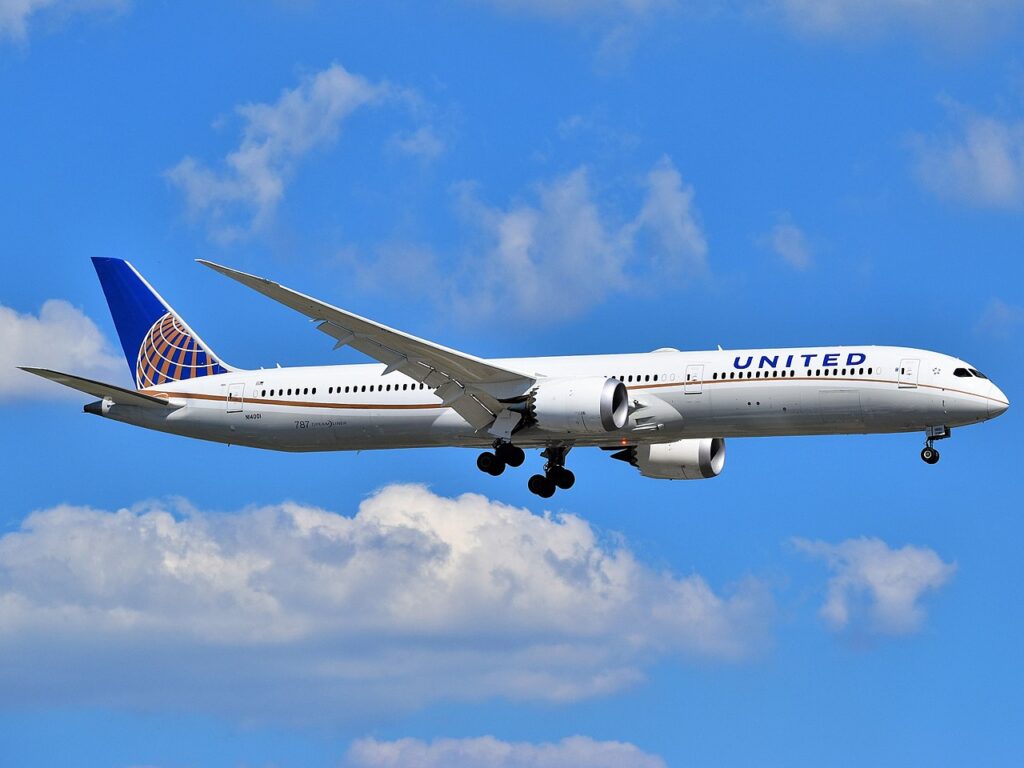
(Image Credits: United Airlines.)
User Generated Content Disclosure: The Bulkhead Seat encourages constructive discussions, comments, and questions. Responses are not provided by or commissioned by any bank advertisers. These responses have not been reviewed, approved, or endorsed by the bank advertiser. It is not the responsibility of the bank advertiser to respond to comments.
Advertiser & Editorial Disclosure: The Bulkhead Seat earns an affiliate commission for anyone approved through the links above This compensation may impact how and where links appear on this site. We work to provide the best publicly available offers to our readers. We frequently update them, but this site does not include all available offers. Opinions, reviews, analyses & recommendations are the author’s alone, and have not been reviewed, endorsed, or approved by any of these entities.