Advertiser & Editorial Disclosure: The Bulkhead Seat earns an affiliate commission for anyone approved through the links below. This compensation may impact how and where links appear on this site. We work to provide the best publicly available offers to our readers. We frequently update them, but this site does not include all available offers. Opinions, reviews, analyses & recommendations are the author’s alone, and have not been reviewed, endorsed, or approved by any of these entities.
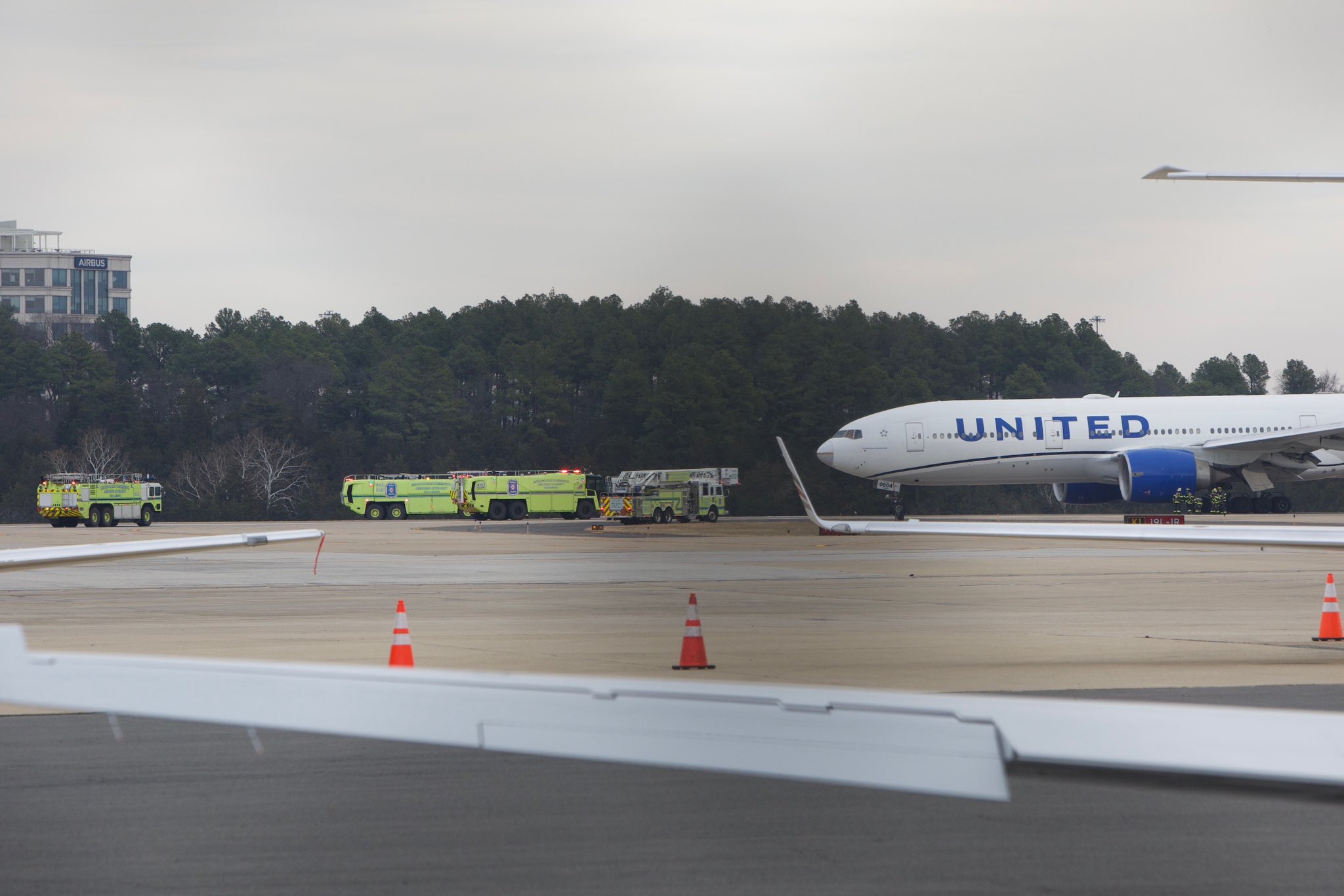
A United Airlines Boeing 777-200ER bound for Tokyo Haneda Airport (HND) was forced to return to Washington Dulles International Airport (IAD) yesterday after an engine failure during takeoff triggered a mayday call and caused small brush fires along the runway. The incident occurred shortly after UA 803 departed around 12:35 PM 275 passengers and 15 crew members on board.
The 27-year-old aircraft lost power in its left engine shortly after liftoff while part of the engine cowling separated from the aircraft. As the aircraft climbed to 5,000 feet, the captain declared an emergency, entered a holding pattern, and began dumping fuel to reach a safe landing weight. The plane touched down safely at Washington Dulles International Airport (IAD) roughly 45 minutes after departure with emergency crews standing by.
Debris from the engine’s cowling ignited patches of dry grass near the runway and produced visible smoke that briefly raised concern among observers. Airport fire crews responded quickly and extinguished the small fires before they could spread. The situation prompted updates from federal officials, including the Transportation Secretary, who was briefed due to the dramatic optics of smoke rising near an active runway.
Despite the disruption, United moved quickly to reaccommodate passengers. The airline found a replacement aircraft and crew. A new flight departed at 7:15 PM (roughly seven hours behind the original schedule). The aircraft is expected to arrive in Tokyo only about six hours later than planned, which is a relatively minimal delay considering the nature of the emergency.
United Airlines released the following statement:
Anthony’s Take: Engine failures are not uncommon and are typically manageable thanks to the redundancy built into modern aircraft. In this case, the incident appeared far more dramatic because of the fires ignited on the ground. Thankfully, no one was injured. The incident remains under review as investigators examine the engine failure and cowling separation.
(Featured Image Credit: Noah Escobar via X.)
User Generated Content Disclosure: The Bulkhead Seat encourages constructive discussions, comments, and questions. Responses are not provided by or commissioned by any bank advertisers. These responses have not been reviewed, approved, or endorsed by the bank advertiser. It is not the responsibility of the bank advertiser to respond to comments.
Advertiser & Editorial Disclosure: The Bulkhead Seat earns an affiliate commission for anyone approved through the links above This compensation may impact how and where links appear on this site. We work to provide the best publicly available offers to our readers. We frequently update them, but this site does not include all available offers. Opinions, reviews, analyses & recommendations are the author’s alone, and have not been reviewed, endorsed, or approved by any of these entities.