
Advertiser & Editorial Disclosure: The Bulkhead Seat earns an affiliate commission for anyone approved through the links below. This compensation may impact how and where links appear on this site. We work to provide the best publicly available offers to our readers. We frequently update them, but this site does not include all available offers. Opinions, reviews, analyses & recommendations are the author’s alone, and have not been reviewed, endorsed, or approved by any of these entities.
United Airlines is rapidly installing Starlink Wi-Fi across its fleet at a pace unmatched by any major carrier. In less than a year, the airline has equipped most of its two-cabin regional fleet (more than 300 aircraft) with Starlink. It plans to extend the technology to more than half of its mainline fleet by the end of 2026 (with the rest coming next year).
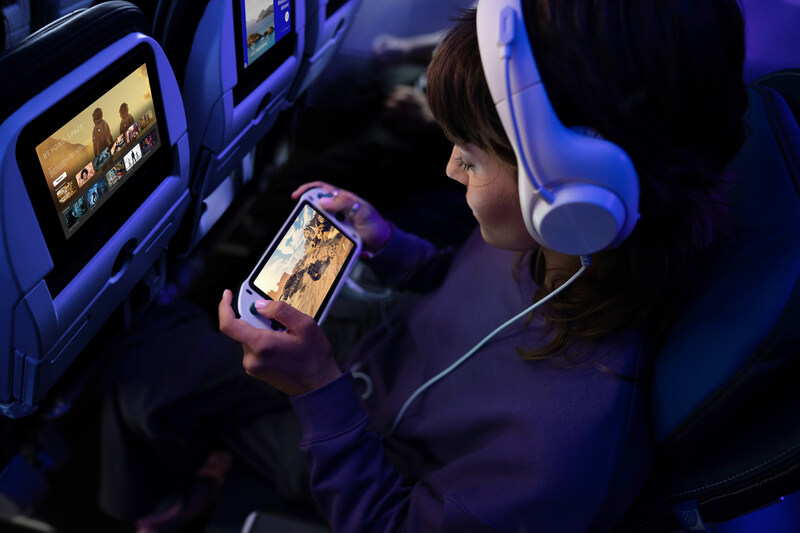
More than 25% of United’s daily departures (roughly 1,200 flights) now feature Starlink. The airline reports that customer satisfaction scores for Wi-Fi on those aircraft have nearly doubled. Over the past 10 months, United has carried more than seven million passengers on Starlink-equipped planes across 129,000 flights. This has supported 3.7 million connected devices.
By the end of 2026, United expects to have Starlink installed on more than 500 mainline aircraft. This will bring the total number of connected planes to over 800. This marks a significant leap toward fleet-wide, gate-to-gate connectivity that supports activities previously unrealistic in the air like watching live sports, online gaming, and real-time access to connected home devices.
United is spotlighting this milestone during the Super Bowl on February 8th with a national advertising campaign that showcases what Starlink makes possible at cruising altitude. The broadcast highlights real-world use cases onboard United flights and emphasizes the reliability and speed of the new system. The campaign will air in several US markets including Cincinnati, Cleveland, Colorado Springs, Denver, Houston, Indianapolis, and Kansas City. These cities already have a significant share of United flights with Starlink. In Indianapolis, more than 63% of United flights are equipped with the system, Kansas City exceeds 53%, and Cincinnati tops 51%.
Passenger feedback has been a key validation point. Travelers consistently cite gate-to-gate connectivity, stable performance, and seamless streaming as standout improvements compared to legacy satellite systems.
User Generated Content Disclosure: The Bulkhead Seat encourages constructive discussions, comments, and questions. Responses are not provided by or commissioned by any bank advertisers. These responses have not been reviewed, approved, or endorsed by the bank advertiser. It is not the responsibility of the bank advertiser to respond to comments.
Advertiser & Editorial Disclosure: The Bulkhead Seat earns an affiliate commission for anyone approved through the links above This compensation may impact how and where links appear on this site. We work to provide the best publicly available offers to our readers. We frequently update them, but this site does not include all available offers. Opinions, reviews, analyses & recommendations are the author’s alone, and have not been reviewed, endorsed, or approved by any of these entities.