Advertiser & Editorial Disclosure: The Bulkhead Seat earns an affiliate commission for anyone approved through the links below. This compensation may impact how and where links appear on this site. We work to provide the best publicly available offers to our readers. We frequently update them, but this site does not include all available offers. Opinions, reviews, analyses & recommendations are the author’s alone, and have not been reviewed, endorsed, or approved by any of these entities.
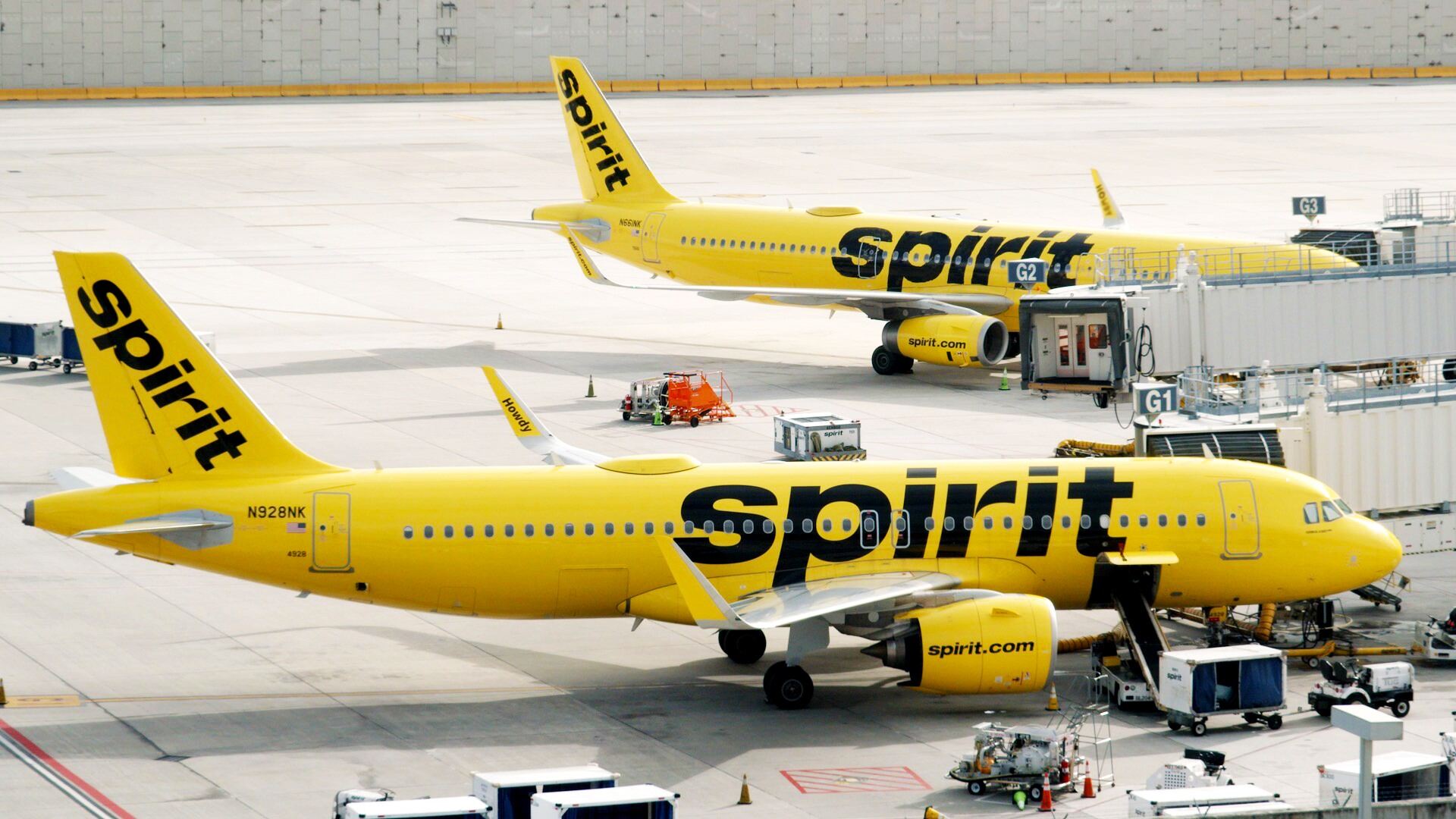
Spirit Airlines has reached another key milestone in its ongoing restructuring. Today, it announced that it has entered into an agreement in principle on the core terms of a restructuring support agreement with its existing debtor-in-possession lenders and secured noteholders.
The agreement is expected to provide the financial backing necessary for Spirit to finalize its restructuring process and implement additional changes aimed at optimizing its fleet, network, and overall cost structure. The airline says it intends to emerge from Chapter 11 in late spring or early summer as a strengthened low-cost carrier offering both basic and premium options at competitive fares.
Spirit outlined several strategic pillars for its post-bankruptcy business model.
Optimized Network
The airline plans to better align its network and capacity with periods of strongest demand. This includes increasing aircraft utilization during peak travel days while trimming flying during off-peak periods. The company also intends to maintain flexibility to shift capacity seasonally across markets.
Expanded Premium Offerings
While maintaining its reputation for low fares, Spirit will grow its Spirit First and Premium Economy products. The carrier also plans enhancements to its Free Spirit loyalty program and co-branded credit card offerings in an effort to build stronger customer loyalty. I’ve been a fan of these First Class (Big Front) seats for years.
Strengthened Balance Sheet
Spirit expects to dramatically reduce its debt and lease obligations from approximately $7.4 billion prior to filing for bankruptcy to around $2.1 billion upon emergence. The company also aims to further lower its cost structure and widen its cost advantage relative to legacy carriers and competitors.
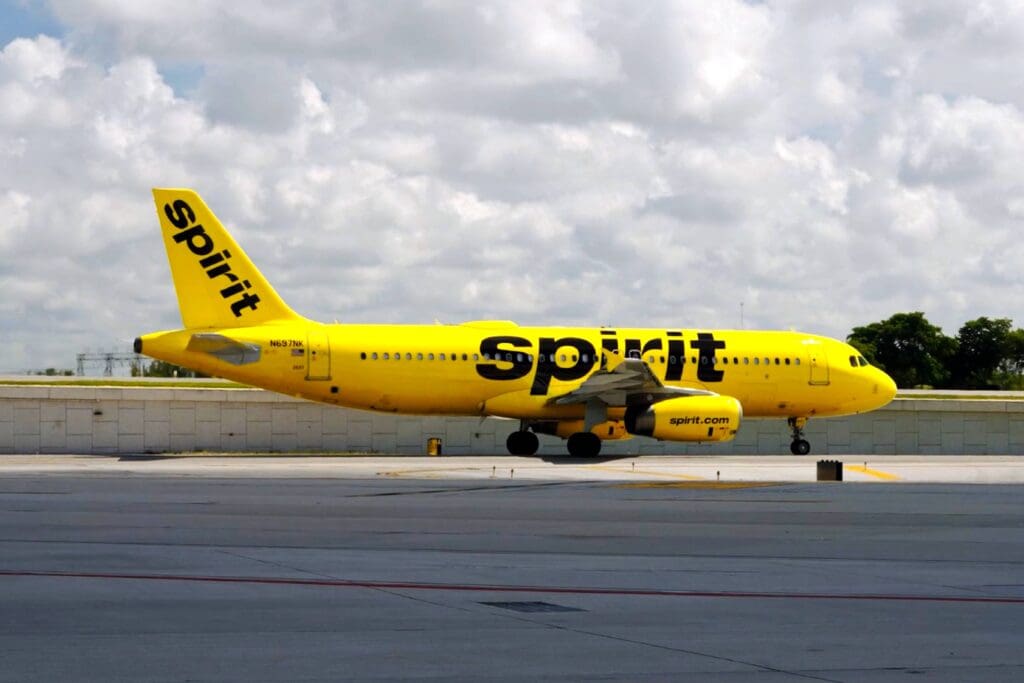
Throughout the restructuring process, Spirit says customers can continue booking flights and using tickets, credits, and loyalty points without interruption.
Spirit’s path to this point has been unusually volatile, even by airline industry standards. The carrier has gone back and forth around a planned merger with Frontier Airlines (before JetBlue stepped in with a higher bid). That acquisition was ultimately blocked by a federal judge, which left Spirit to navigate mounting financial pressures alone.
Spirit then entered Chapter 11 bankruptcy for the first time (it emerged months later). However, after emerging, the airline struggled to address its deeper operational challenges (including weak margins and cost pressures). Within months, it filed for bankruptcy protection again.
While Chapter 11 can provide relief from heavy debt burdens, it does little to solve fundamental issues such as persistently low yields and thin operating margins. In recent months, speculation has repeatedly surfaced suggesting Spirit was nearing liquidation as it raced to meet funding deadlines.
The latest agreement suggests creditors are willing to back the airline’s revised strategy, but questions remain about whether underlying market conditions have improved enough to support long-term profitability. Spirit’s plan to shrink capacity in certain markets while emphasizing higher-yield products represents a notable shift for an ultra-low-cost carrier. Traditionally, the model relies heavily on growth to maintain a structural cost advantage, particularly by keeping labor costs lower across a larger workforce base. Whether scaling back while adding more premium options can generate sustainable margins remains to be seen.
Dave Davis, Spirit’s President and Chief Executive Officer, said:
This agreement in principle is the result of months of hard work and allows Spirit to move toward completing its transformation. Spirit will emerge as a strong, leaner competitor that is positioned to profitably deliver the value American consumers expect at a price they want to pay. I am grateful to our Team Members for their dedication and unwavering commitment to our Guests throughout our restructuring. I also want to thank our Guests for continuing to choose Spirit to connect them to the people and places that matter most.”
Anthony’s Take: Despite the challenges, Spirit appears determined to reposition itself as a leaner, more focused airline with a simplified balance sheet and refined network strategy. If the restructuring proceeds as planned, Spirit aims to exit Chapter 11 by early summer, hoping to re-emerge as a viable competitor in an increasingly competitive US airline landscape.
(Image Credits: Spirit Airlines.)
User Generated Content Disclosure: The Bulkhead Seat encourages constructive discussions, comments, and questions. Responses are not provided by or commissioned by any bank advertisers. These responses have not been reviewed, approved, or endorsed by the bank advertiser. It is not the responsibility of the bank advertiser to respond to comments.
Advertiser & Editorial Disclosure: The Bulkhead Seat earns an affiliate commission for anyone approved through the links above This compensation may impact how and where links appear on this site. We work to provide the best publicly available offers to our readers. We frequently update them, but this site does not include all available offers. Opinions, reviews, analyses & recommendations are the author’s alone, and have not been reviewed, endorsed, or approved by any of these entities.