Advertiser & Editorial Disclosure: The Bulkhead Seat earns an affiliate commission for anyone approved through the links below. This compensation may impact how and where links appear on this site. We work to provide the best publicly available offers to our readers. We frequently update them, but this site does not include all available offers. Opinions, reviews, analyses & recommendations are the author’s alone, and have not been reviewed, endorsed, or approved by any of these entities.
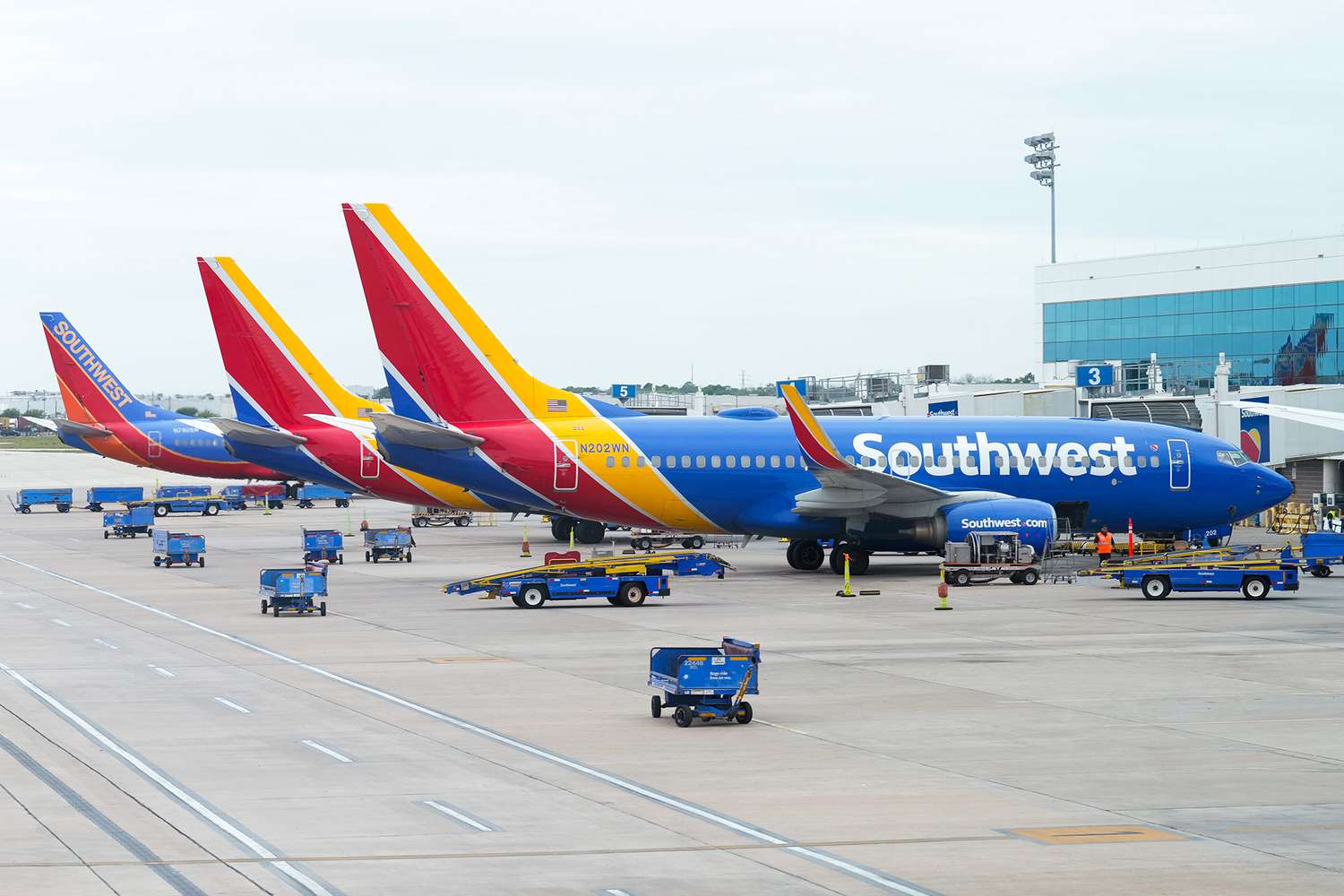
More than 50 years after it pioneered open seating, Southwest Airlines will officially retire the free-for-all boarding process that became one of its most distinctive traits. Beginning Tuesday, January 27th, every Southwest flight will depart with assigned seating (ending the tradition of picking any open seat after boarding). The shift brings Southwest in line with most major US carriers and introduces a new fare-based seat selection system (along with a full overhaul of the boarding experience).
How Assigned Seating Works
Passengers booking flights departing on or after January 27th have already been able to select seats since July 2025. With assigned seating, passengers on the same reservation board together automatically. This eliminates the need to set alarms for early online check-in to score a better boarding group.
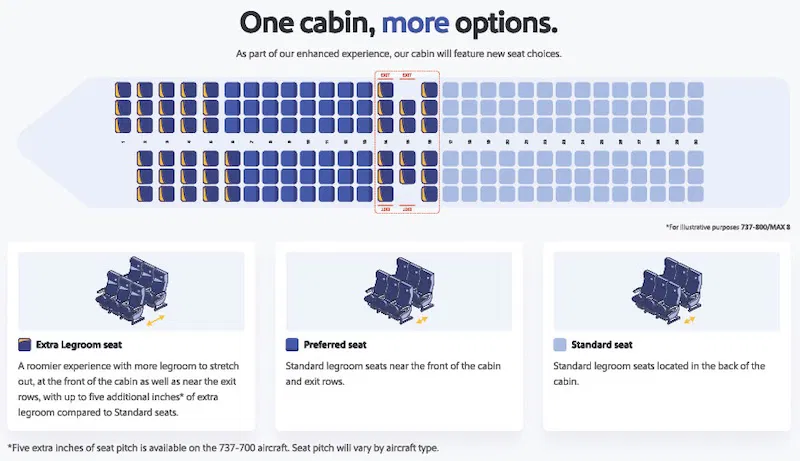
Southwest’s new seating structure introduces three categories:
• Standard Seats: 31 inches of legroom from row 17 to the back
• Preferred Seats: Same pitch as Standard, but closer to the front
• Extra Legroom Seats: Up to five additional inches with complimentary premium beverages and enhanced snacks. This is available in the first five rows and exit rows on applicable aircraft
Access to these categories depends on fare type, Southwest elite status, and Southwest credit card benefits.
Seat Access by Fare Type (Without Status or Credit Card Perks)
• Basic: Seat assigned at check-in
• Choice: Standard seats available at booking
• Choice Preferred: Standard or Preferred at booking
• Choice Extra: Any seat at booking (including Extra Legroom)
Elite Status Bends the Rules
Frequent flyers gain more flexibility:
• A-List: Preferred at booking; Extra Legroom 48 hours before departure (if available)
• A-List Preferred: Extra Legroom at booking
Credit cards also play a role in allowing cardholders to select seats closer to departure or upgrade into Preferred and Extra Legroom categories depending on the card tier.
New Boarding Groups Replace Letters
Southwest’s iconic A-B-C columns are gone. In their place, passengers will now board in Groups 1 through 8, sorted by fare type, elite status, and credit card benefits:
• Groups 1–2: Choice Extra, Extra Legroom upgrades, A-List Preferred, and A-List with Extra Legroom
• Groups 3–5: Choice Preferred, A-List, and Rapid Rewards credit cardholders
• Groups 6–8: Choice and Basic fares
Travelers may also purchase Priority Boarding starting 24 hours before departure (with pricing based on flight demand).
A Major Cultural Shift for Southwest
For many longtime Southwest loyalists, the end of open seating marks a sentimental milestone. Introduced in 1971, the system was designed to speed up aircraft turns and reinforce the airline’s casual, egalitarian personality. Over the years, it inspired everything from loyalty hacks to friendly competition in the boarding area. While nostalgic for some, others welcome the predictability of guaranteed seating and fewer middle-seat surprises. This will also hopefully end people gaming the system with wheelchairs and pre-boarding for better seats.
What Passengers Should Expect Next
With assigned seating:
• Boarding should become more orderly and faster
• Families and groups no longer need special procedures to sit together
• Basic fares will generally push travelers toward the rear
• Extra Legroom becomes Southwest’s first meaningful premium seating option
• Future product upgrades are now possible in ways open seating never allowed
The last scheduled flight with open seating is between Honolulu’s Daniel K. Inouye International Airport (HNL) and Los Angeles International Airport (LAX) today.
Anthony’s Take: For Southwest, this update represents a major strategic pivot (and possibly a structural necessity) as the carrier moves deeper into competitive territory once dominated by legacy airlines. For passengers, it marks the end of one of aviation’s quirkiest traditions and the beginning of a more familiar experience grounded in fares, status, and perks (like almost every other airline).
(Image Credits: Southwest Airlines.)
User Generated Content Disclosure: The Bulkhead Seat encourages constructive discussions, comments, and questions. Responses are not provided by or commissioned by any bank advertisers. These responses have not been reviewed, approved, or endorsed by the bank advertiser. It is not the responsibility of the bank advertiser to respond to comments.
Advertiser & Editorial Disclosure: The Bulkhead Seat earns an affiliate commission for anyone approved through the links above This compensation may impact how and where links appear on this site. We work to provide the best publicly available offers to our readers. We frequently update them, but this site does not include all available offers. Opinions, reviews, analyses & recommendations are the author’s alone, and have not been reviewed, endorsed, or approved by any of these entities.