Advertiser & Editorial Disclosure: The Bulkhead Seat earns an affiliate commission for anyone approved through the links below. This compensation may impact how and where links appear on this site. We work to provide the best publicly available offers to our readers. We frequently update them, but this site does not include all available offers. Opinions, reviews, analyses & recommendations are the author’s alone, and have not been reviewed, endorsed, or approved by any of these entities.
Asiana Airlines is entering a new phase in its post-merger alignment with Korean Air. It will shift all of its Seoul Incheon International Airport (ICN) operations from Terminal 1 to Terminal 2 beginning January 14th. This will unify its check-in, departure, and arrival activities with Korean Air and its affiliated low-cost carriers. The move represents a major milestone in the ongoing integration of the two carriers under the Hanjin Group umbrella.
The Chosun Daily reports that after January 14th, Asiana passengers will begin checking in at counters G, H, and J on Terminal 2’s third floor (with boarding from the East Wing). Arriving passengers after midnight on January 14th will enter through Terminal 2 for the first time. The inaugural outbound flight from the new terminal will be a 7:00 AM departure to Osaka’s Kansai International Airport (KIX). Asiana travelers will also gain access to the Korean Air lounge in Terminal 2, which is slated for a renovation and expansion to accommodate the additional passengers that the relocation will bring.
Consolidating operations allows Korean Air, Asiana, Jin Air, Air Seoul, and Air Busan to operate from a single terminal. This will streamline transfers and create a more cohesive travel experience for passengers flying within the group. Other Korean low-cost carriers, including Jeju Air, T’way Air, Eastar Jet, and Air Premia, will continue to operate from Terminal 1.
To reduce confusion during the transition, Asiana plans to alert customers throughout the travel process. For two weeks following the move, the carrier will operate transport vehicles to assist travelers who mistakenly arrive at Terminal 1.
Anthony’s Take: A unified operation in Terminal 2 will simplify the process for passengers and provide a more cohesive experience for employees as well.
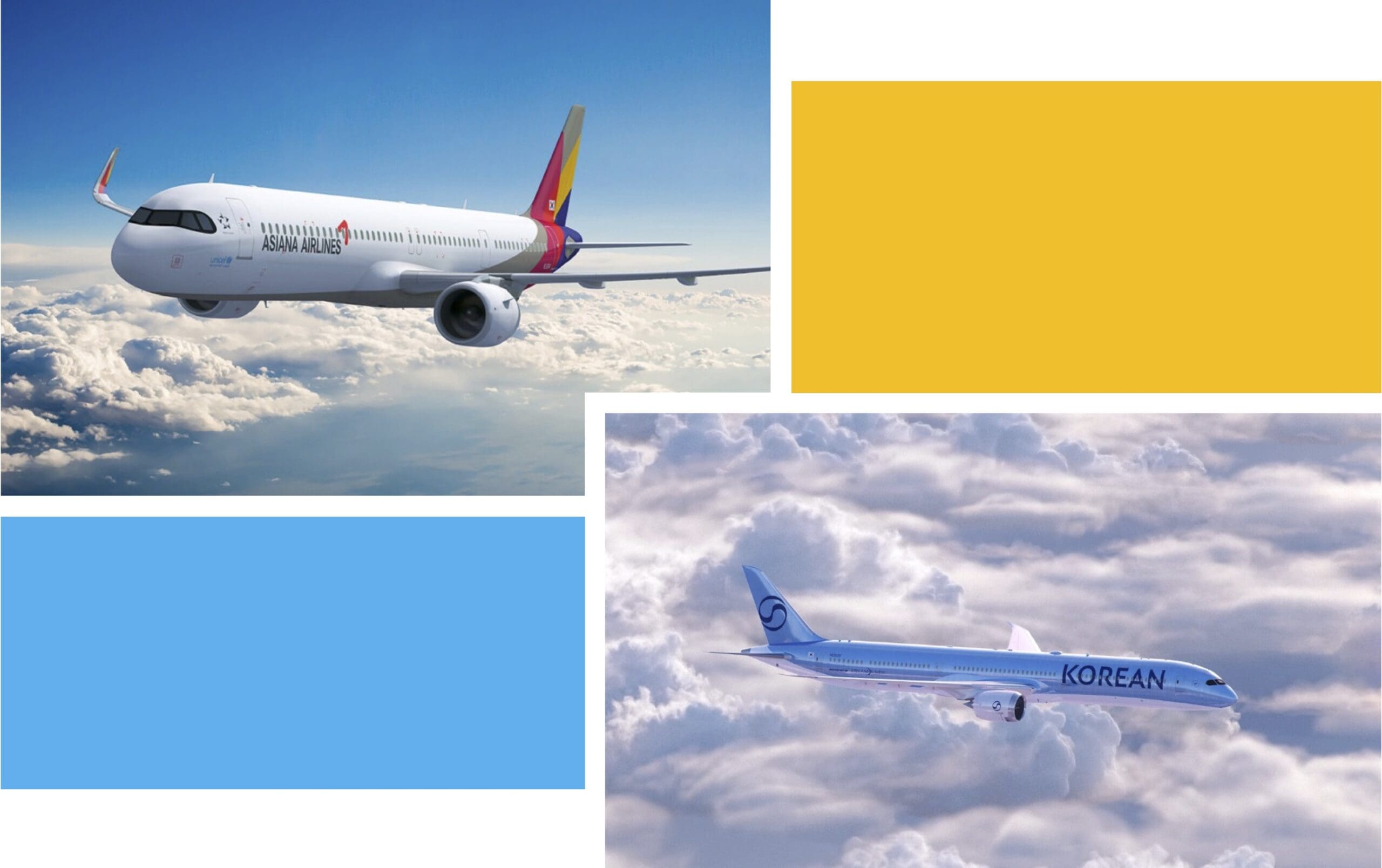
(Featured Image Credit: Asiana Airlines and Korean Air.)
User Generated Content Disclosure: The Bulkhead Seat encourages constructive discussions, comments, and questions. Responses are not provided by or commissioned by any bank advertisers. These responses have not been reviewed, approved, or endorsed by the bank advertiser. It is not the responsibility of the bank advertiser to respond to comments.
Advertiser & Editorial Disclosure: The Bulkhead Seat earns an affiliate commission for anyone approved through the links above This compensation may impact how and where links appear on this site. We work to provide the best publicly available offers to our readers. We frequently update them, but this site does not include all available offers. Opinions, reviews, analyses & recommendations are the author’s alone, and have not been reviewed, endorsed, or approved by any of these entities.