Advertiser & Editorial Disclosure: The Bulkhead Seat earns an affiliate commission for anyone approved through the links below. This compensation may impact how and where links appear on this site. We work to provide the best publicly available offers to our readers. We frequently update them, but this site does not include all available offers. Opinions, reviews, analyses & recommendations are the author’s alone, and have not been reviewed, endorsed, or approved by any of these entities.
As I wrote about earlier this month, United Airlines has officially started selling its new “basic” fares in premium cabins, including Polaris® (Business Class) and Premium Plus. More details have been released and they reveal a significant shift in how travelers earn rewards (or don’t).
While the airline initially announced plans to introduce stripped-down fare options in its most premium seats, it had not clarified how those tickets would impact MileagePlus earnings or elite status qualification. Now that the fares are live and for many travelers, the loyalty benefits are dramatically reduced.
For passengers without Premier elite status or an eligible United cobranded credit card, basic Polaris® and Premium Plus tickets earn zero redeemable miles. That means a traveler could spend thousands of dollars on a long-haul Business Class ticket and receive no miles in return. Even for those with status or a cobranded card, earning rates are reduced and mirror those of Basic Economy fares.
The impact on status qualification is just as notable. Basic premium tickets do not earn Premier Qualifying Flights (PQFs) regardless of status or credit cards held. This creates an unusual dynamic where a low-cost Economy ticket may contribute more toward status qualification than a far more expensive Business Class fare. There is one exception: travelers will still earn full Premier Qualifying Points (PQPs) on these fares. Since PQPs are tied to ticket spend, this ensures that purchases still contribute toward elite status, but only through one of United’s qualification metrics.
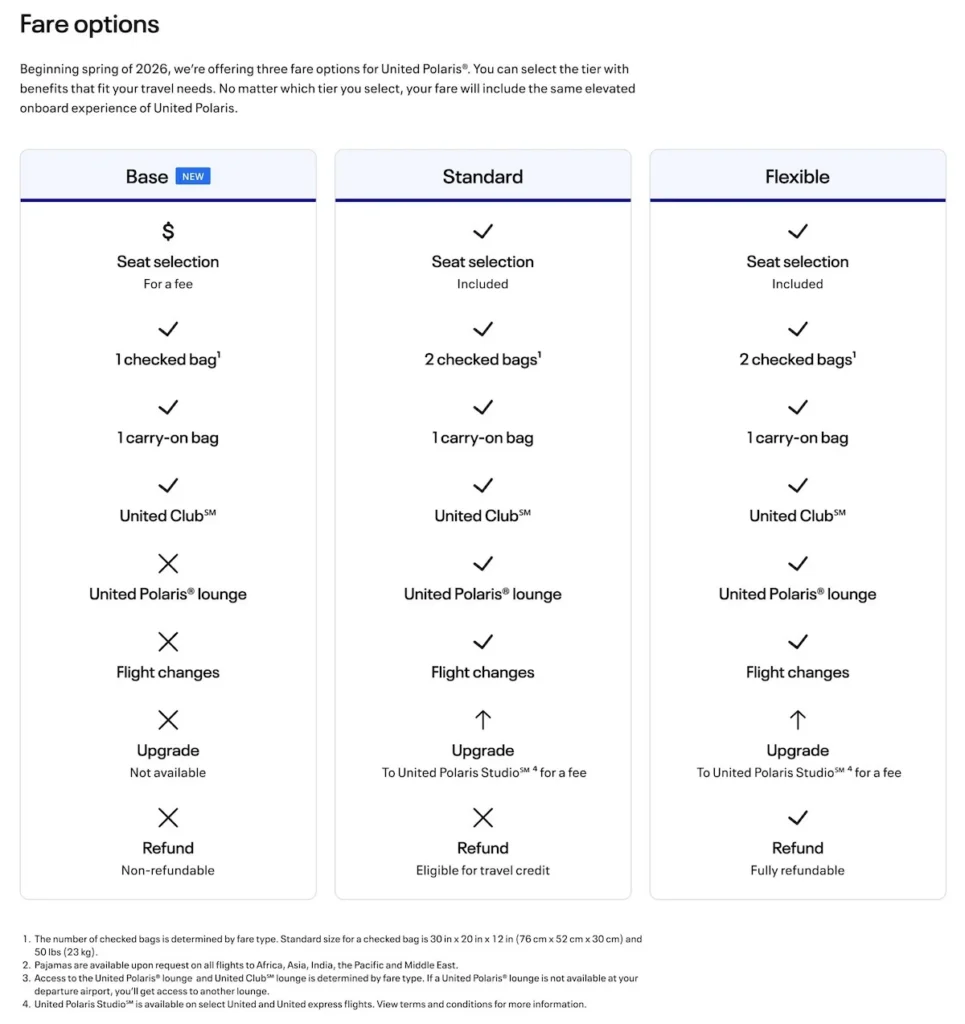
Beyond loyalty implications, the new fares come with a range of restrictions that further differentiate them from standard and flexible premium tickets. In Polaris® (Business Class), passengers must pay for seat selection, receive only one checked bag instead of two, and are not eligible for changes, refunds, or upgrades to Polaris Studio. Access to Polaris® Lounges is also excluded (though standard United Club℠ access remains).
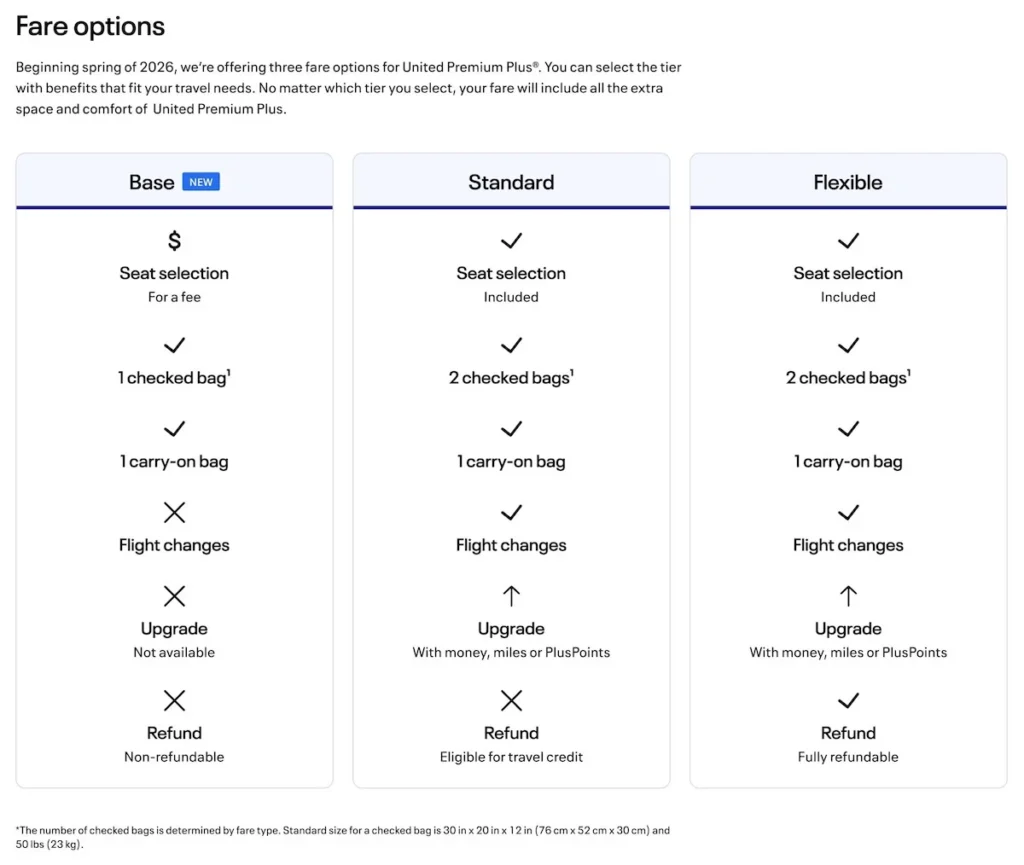
Premium Plus passengers face similar limitations, including paid seat selection, reduced baggage allowance, and no ticket flexibility.
United describes the move as part of a broader shift toward a tiered fare structure across cabins, offering basic, standard, and flexible options. The airline says this approach gives customers more choice, but the structure also clearly incentivizes travelers to pay more for fewer restrictions or to hold a cobranded credit card to unlock better earning rates.
From a business perspective, the strategy aligns with broader industry trends. Airlines have long used Basic Economy fares to segment customers and drive upsells. Extending that model into premium cabins reflects strong demand from leisure travelers willing to pay for comfort, but not necessarily at traditional Business Class price points.
However, the rollout raises concerns among frequent flyers. The idea that a premium cabin ticket costing several thousand dollars may not earn miles or flight credits challenges long-standing expectations around airline loyalty programs. United is the first major US carrier to introduce basic fares in premium cabins, but it likely won’t be the last. Delta has already signaled plans to follow with its own version, though details have yet to be announced. American Airlines could also adopt a similar approach.
Anthony’s Take: For travelers, the key takeaway is simple: not all Business Class tickets are created equal anymore. As airlines continue to unbundle premium experiences, understanding fare rules (especially those tied to loyalty earnings) will be more important than ever when booking high-end travel. This will not save travelers money in the long run and will simply move the cost upwards if you want all of the bells and whistles.
(Image Credits: United Airlines.)
User Generated Content Disclosure: The Bulkhead Seat encourages constructive discussions, comments, and questions. Responses are not provided by or commissioned by any bank advertisers. These responses have not been reviewed, approved, or endorsed by the bank advertiser. It is not the responsibility of the bank advertiser to respond to comments.
Advertiser & Editorial Disclosure: The Bulkhead Seat earns an affiliate commission for anyone approved through the links above This compensation may impact how and where links appear on this site. We work to provide the best publicly available offers to our readers. We frequently update them, but this site does not include all available offers. Opinions, reviews, analyses & recommendations are the author’s alone, and have not been reviewed, endorsed, or approved by any of these entities.