Advertiser & Editorial Disclosure: The Bulkhead Seat earns an affiliate commission for anyone approved through the links below. This compensation may impact how and where links appear on this site. We work to provide the best publicly available offers to our readers. We frequently update them, but this site does not include all available offers. Opinions, reviews, analyses & recommendations are the author’s alone, and have not been reviewed, endorsed, or approved by any of these entities.
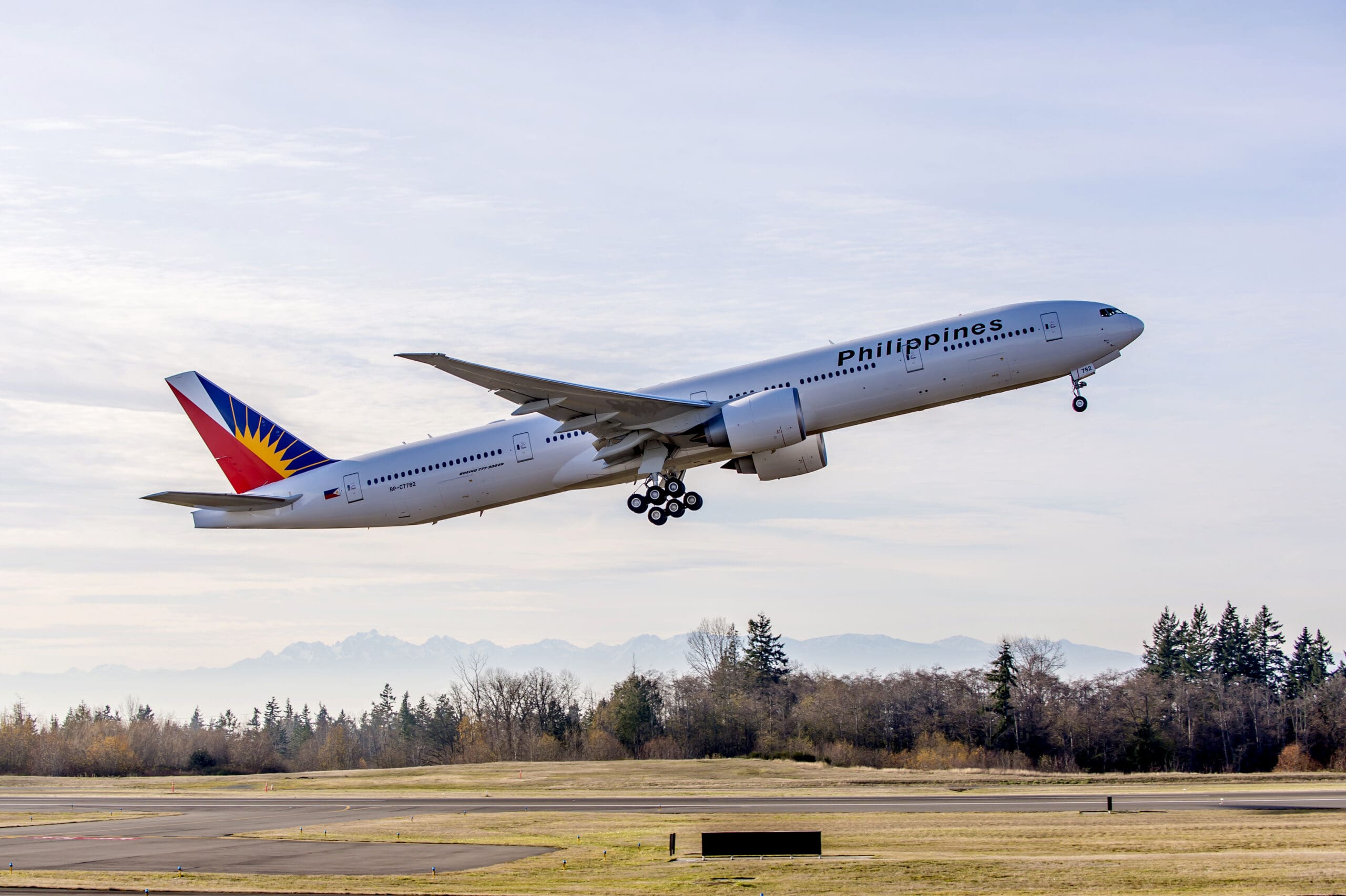
A recent Philippine Airlines flight from Los Angeles International Airport (LAX) to Manila’s Ninoy Aquino International Airport (MNL) turned into a disgusting behind-the-scenes operational crisis for the crew. According to multiple crew accounts, flight PR113 experienced a full lavatory failure mid-Pacific. Not one or two toilets malfunctioning, but all of lavatories on the Boeing 777-300ER reportedly stopped flushing at once. A diversion was discussed and ultimately rejected. The flight continued to Manila and landed on time with the crew having to handle the disgusting lavatories.
While the flight appeared calm, what unfolded out of view has now raised serious questions in aviation and labor circles. Crew members claim they were instructed to manually remove human waste from toilets and dispose of it in adjacent lavatory basins to prevent overflow and maintain restroom access. Industry sources say there is no established aviation safety protocol from IATA, ICAO, or carriers that endorses such an improvised response. Concerns center on sanitation, biosecurity, and occupational safety rather than passenger comfort. The absence of visible fallout may have shielded the airline from regulatory or reputational damage, but crew argue that does not make the solution professionally acceptable.
After landing, crew reported the event to the airline’s union, which is now probing both the operational decision-making and the lack of post-incident follow-up. Criticism has been directed at:
- The captain’s decision not to divert
- The purser and supervising personnel onboard
- Management for reportedly failing to conduct internal review afterward
Insiders say the most troubling element was the silence that followed. Without complaints from passengers, the episode was allegedly left unaddressed. This move increases the likelihood of recurrence according to the unions.
From the outside, flight PR113 was a success: no delays, no diversions, no customer backlash, and no regulatory intervention. Inside the aircraft, however, the incident is now viewed as a case study in how prioritizing timeliness and cost can overshadow crew safety and proper crisis response. Aviation veterans note that lavatory failures mid-ocean are rare but not unprecedented. Typically, partial failures lead to isolated closures and full system failures often trigger diversions.
Anthony’s Take: This is so gross. It must have been awful for the crew to literally have to shovel waste into the sink.
(Featured Image Credit: Philippine Airlines.)
(H/T: One Mile at a Time.)
User Generated Content Disclosure: The Bulkhead Seat encourages constructive discussions, comments, and questions. Responses are not provided by or commissioned by any bank advertisers. These responses have not been reviewed, approved, or endorsed by the bank advertiser. It is not the responsibility of the bank advertiser to respond to comments.
Advertiser & Editorial Disclosure: The Bulkhead Seat earns an affiliate commission for anyone approved through the links above This compensation may impact how and where links appear on this site. We work to provide the best publicly available offers to our readers. We frequently update them, but this site does not include all available offers. Opinions, reviews, analyses & recommendations are the author’s alone, and have not been reviewed, endorsed, or approved by any of these entities.