
Advertiser & Editorial Disclosure: The Bulkhead Seat earns an affiliate commission for anyone approved through the links below. This compensation may impact how and where links appear on this site. We work to provide the best publicly available offers to our readers. We frequently update them, but this site does not include all available offers. Opinions, reviews, analyses & recommendations are the author’s alone, and have not been reviewed, endorsed, or approved by any of these entities.
The travel economy in the United States is being increasingly shaped by a relatively small share of wealthy households. New research from Resonance Consultancy finds that the top 10% and top 1% of American households now account for more than half of all US consumer spending (with the most pronounced impact in travel and tourism). Their collective leisure spending is projected to reach $544 billion in 2026.
The findings are drawn from the 2026 Future of Luxury Travel. This is a longitudinal study of high-net-worth and affluent US travelers conducted in partnership with research firm Léger. Surveys captured behavior from 1,050 top 10% households (defined as earning $240,000 to $600,000 annually or holding net worth of $1.5 million to $13 million and 451 top 1% households exceeding those thresholds).
Trip Frequency and Travel Spend Continue to Surge
Affluent households travel more frequently and spend far more per trip than the general population. The top 10% now average 4.3 leisure trips annually while the top 1% percent average six (more than double the 2.8-trip national average). The share of top 10% travelers taking six to eleven trips a year jumped from 11% in 2022 to 18% in 2025. Among the top 1% that figure rose from 15% to 27%. Spending has also accelerated sharply. The top 10% now spend an average of $7,900 per leisure trip (up from $5,100 in 2022). The top 1% spend $12,400 (up from $8,400). For comparison, the average American traveler spends roughly $3,700 per trip. With this acceleration, wealthy US households have become the dominant force sustaining demand for hospitality and tourism globally.
Wellness, Longevity, and Ultra-Luxury Cruising Gain Momentum
Three macro-trends highlighted in the report are reshaping the landscape of luxury travel supply:
- Wellness and longevity travel is surging. 34% of top 1% travelers and 21% of top 10% travelers plan a wellness-focused trip in the next year. This is driven by interest in longevity science, performance health, diagnostics, and regenerative therapies. Resorts from Costa Rica to Saudi Arabia’s emerging AMAALA development are catering to this demand.
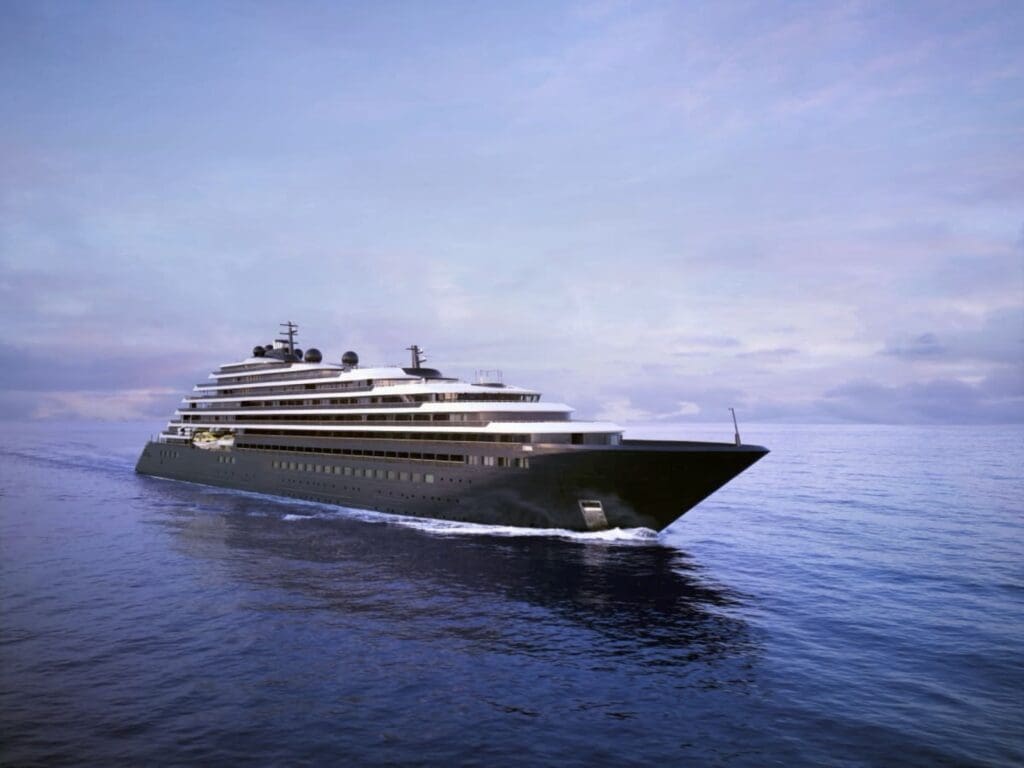
- Affluent cruising is rebounding. Interest in cruising among top 1% travelers rose from 37% in 2019 to 53% in 2025. Ultra-luxury entrants such as the Ritz-Carlton Yacht Collection, Four Seasons Yachts (launching this year), and Aman at Sea (coming in 2027) are positioning themselves for this market. These vessels, typically carrying under 300 guests, offer service levels and exclusivity closer to land-based luxury properties.
- New-scale hospitality is replacing legacy luxury. Hotel development is bifurcating as mid-scale projects struggle for financing while sub-150-key luxury resorts with branded residences, private villas, and club components continue to attract capital. STR data shows luxury chain-scale ADR grew 5.7% in 2025 (while mid-scale and economy segments saw minimal growth).
Affluent Travelers Are Shifting Destinations
New geographic patterns are emerging:
- Canada has surpassed Mexico as the number one international destination among affluent US households. 26% of top 10% travelers and 34% of the top 1% planning trips have shifted. Proximity, safety, diversified itineraries, and airlift are driving demand, particularly from coastal origin markets.
- Costa Rica is gaining share from the Caribbean. Interest among top 1% travelers has nearly doubled since 2019 with 18% planning to visit in the next two years. This outpaces any single Caribbean market. Recent branded developments and expanded nonstop US air service have shifted the country from eco-tourism niche to mainstream luxury.
- The Middle East is gaining mindshare among younger affluent travelers. Interest in the region among top 1% travelers climbed from 6% in 2019 to 13% in 2025 (Dubai acts as the hub of demand). Among affluent travelers aged 18 to 34, 26% intend to visit. This reflects a generational preference for novelty, spectacle, and cultural immersion.
Implications for Hospitality, Tourism, and Real Estate
The 2026 report outlines five strategic imperatives for destinations, developers, and operators:
- Anchor strategy in affluent demand rather than legacy luxury positioning.
- Make experiences and not amenities the primary product, with nature, culture, learning, longevity, and wellness at the forefront.
- Design for authenticity and resilience so offerings remain relevant as external conditions shift.
- Build ecosystems, not standalone assets, integrating hotels, residences, clubs, and programming.
- Master omnichannel visibility across direct channels, advisors, OTAs, credit card platforms, and AI interfaces.
About the Study
The 2026 Future of Luxury Travel draws from surveys conducted August 13th to September 7th and continues Resonance’s research on affluent travel behavior dating back to 2007. The 2026 edition was developed in collaboration with architecture and design firm Hart Howerton.
Anthony’s Take: It’s fascinating to see the changes in spend, destination, and more among the top 10% and top 1%. A lot of this is no surprise and I don’t see this trend changing anytime soon.
(Image Credits: jacoblund via iStock and Ritz-Carlton.)
User Generated Content Disclosure: The Bulkhead Seat encourages constructive discussions, comments, and questions. Responses are not provided by or commissioned by any bank advertisers. These responses have not been reviewed, approved, or endorsed by the bank advertiser. It is not the responsibility of the bank advertiser to respond to comments.
Advertiser & Editorial Disclosure: The Bulkhead Seat earns an affiliate commission for anyone approved through the links above This compensation may impact how and where links appear on this site. We work to provide the best publicly available offers to our readers. We frequently update them, but this site does not include all available offers. Opinions, reviews, analyses & recommendations are the author’s alone, and have not been reviewed, endorsed, or approved by any of these entities.


2 comments
Interesting if a bit depressing. I agree with your take that these trends are unlikely to change soon.
that’s a huge number – $544 billion! what’s driving this travel boom, do you think it’s just about luxury or are people seeking experiences too? 🤔