Advertiser & Editorial Disclosure: The Bulkhead Seat earns an affiliate commission for anyone approved through the links below. This compensation may impact how and where links appear on this site. We work to provide the best publicly available offers to our readers. We frequently update them, but this site does not include all available offers. Opinions, reviews, analyses & recommendations are the author’s alone, and have not been reviewed, endorsed, or approved by any of these entities.
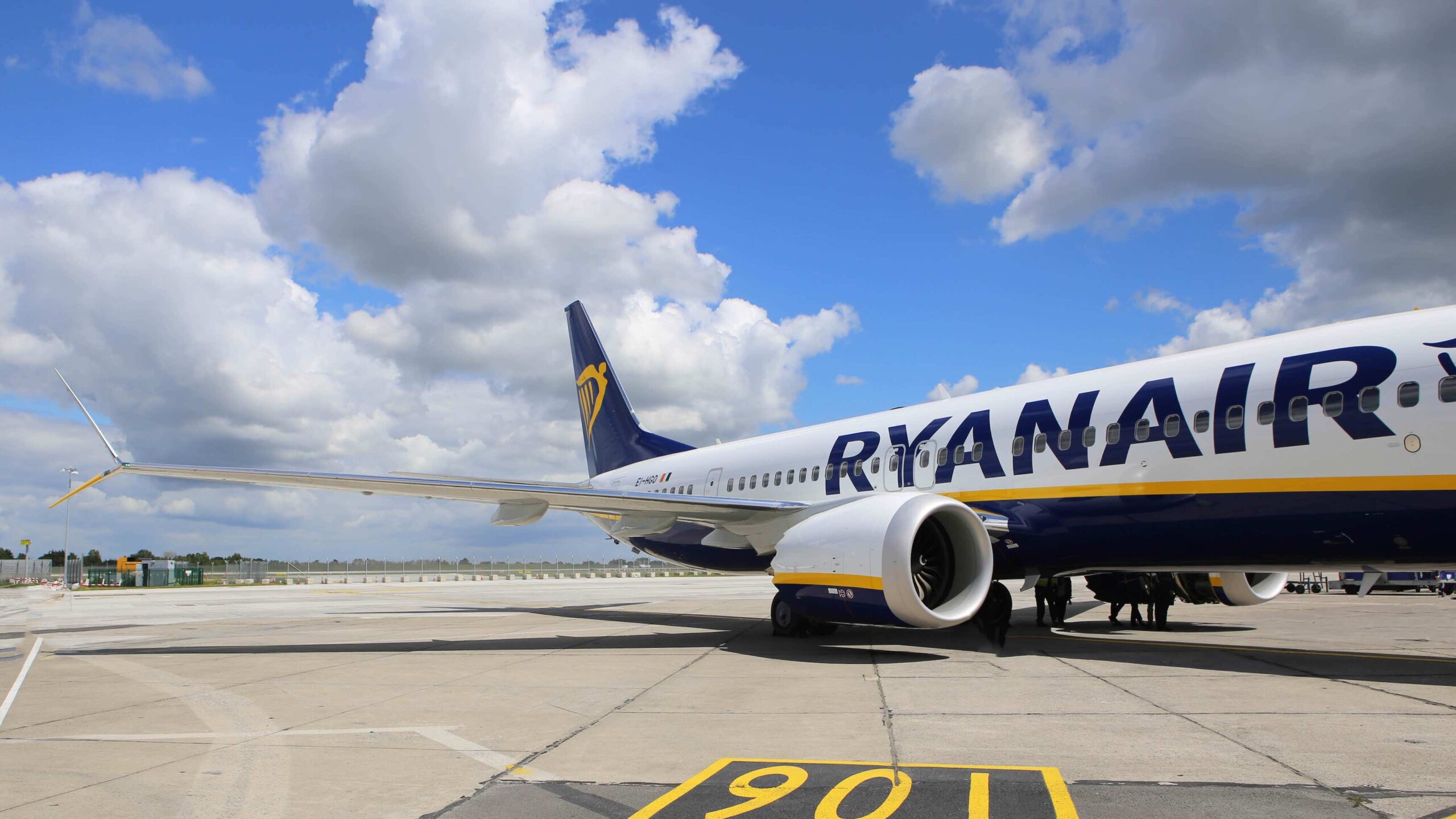
Ryanair’s CEO, Michael O’Leary, is probably one of the most controversial and outspoken figures in the commercial airline industry. Say what you will about the low-cost carrier, but it’s profitable and is the largest airline in Europe when looking at passenger numbers, seats offered, and fleet size. Ryanair does not offer Wi-Fi currently and from recent interviews it seems like this is also its future.
As more global airlines adopt Starlink (I just wrote about the Lufthansa Group signing on this week) to deliver fast, complimentary inflight Wi-Fi, Ryanair has emerged as a notable holdout. The Dublin-based airline has made it clear that it has no plans to install the satellite system. This has sparked debate among aviation watchers, tech enthusiasts, Starlink supporters, and even Elon Musk.
Asked in a recent interview about the prospect of introducing Starlink, Ryanair’s CEO Michael O’Leary dismissed the idea completely. He argued that installing the necessary antenna would increase fuel burn and that passengers on short-haul flights are unlikely to pay for Wi-Fi. O’Leary cited a roughly 2% fuel penalty from added weight and drag, but concluded that the economics do not align with Ryanair’s one-hour average stage length or its ultra-low-cost business model.
Starlink leadership quickly countered his claim. Michael Nicolls, the company’s Vice President of Engineering, stated that newer terminals are slimmer and more efficient with fuel impacts closer to 0.3% on aircraft such as the Boeing 737-800.
Elon Musk also weighed in and suggested that the difference in fuel burn would be negligible and difficult to measure on short flights.
While the technical debate over fuel implications has dominated the social media conversation, industry observers like Lucky at One Mile at a Time note that O’Leary’s broader point is harder to dispute: Ryanair’s strategy is built on cost discipline, network breadth, low fares, and not ancillary amenities. The airline competes on price and schedule rather than product differentiation. Its margins and profitability reflect that approach. With limited competition in many markets and little passenger expectation for connectivity on one-hour hops, Ryanair sees no commercial upside in adopting Starlink.
User Generated Content Disclosure: The Bulkhead Seat encourages constructive discussions, comments, and questions. Responses are not provided by or commissioned by any bank advertisers. These responses have not been reviewed, approved, or endorsed by the bank advertiser. It is not the responsibility of the bank advertiser to respond to comments.
Advertiser & Editorial Disclosure: The Bulkhead Seat earns an affiliate commission for anyone approved through the links above This compensation may impact how and where links appear on this site. We work to provide the best publicly available offers to our readers. We frequently update them, but this site does not include all available offers. Opinions, reviews, analyses & recommendations are the author’s alone, and have not been reviewed, endorsed, or approved by any of these entities.